
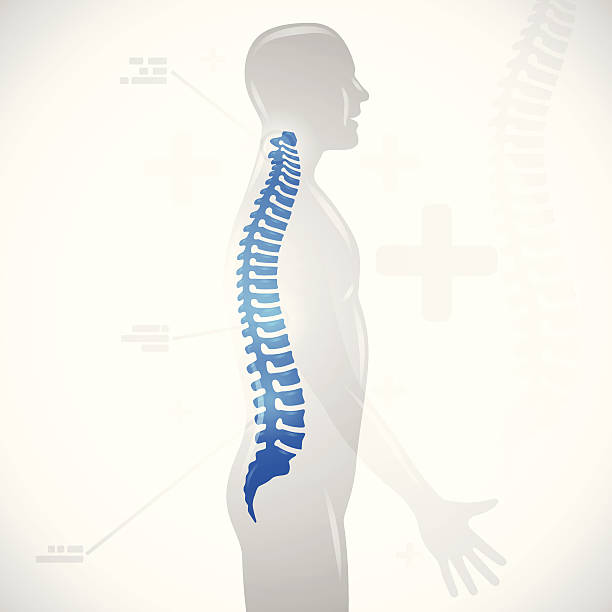
As water fitness instructors, we know that the safest position for exercise is with the spine in neutral alignment. But we don’t always see that in our class participants. Perhaps they had an injury, or surgery, or years of habitual movement patterns that changed their posture. Or perhaps they have poor body awareness. You might notice shallow water participants leaning side to side as they jog, or curling forward while traveling backward, or waving their arms aimlessly during upper body moves. You might notice your deep water participants flailing in an effort to stay upright, or traveling when they are trying to stay in place and staying in place while they are trying to travel. What all these participants need to learn is how to engage their core muscles and stabilizers before activating their prime movers. The technique for teaching this is called the Heavy Concept.
The Heavy Concept: Activating Core with Neuromuscular Retraining is a new book by Christine Alexander and Ruth Sova.
Stabilization is the ability to maintain balance and control during movement. This requires coordination between the muscles, tendons, and ligaments that support the joints. When you perform any type of movement, the prime movers, or agonists, are primarily responsible for creating the movement. The antagonist muscles oppose the movement of the prime movers. There may also be some muscles that assist the movement. The stabilizer muscles provide support and stability to the prime movers. The muscles of the core, including the transverse abdominis, multifidus, gluteus medius, and pelvic floor muscles, function as stabilizers in nearly every movement. Ideally the stabilizer muscles fire first, that is, movement begins from the inside, ensuring that the movement is executed with proper form.
To help your participants become aware of their stabilizers, ask them to stand (or suspend in deep water with a flotation belt) with good posture and imagine that they want to lift one knee, but the knee is so heavy that they are unable to lift it. As they continue to try to lift their “heavy” knee they will feel their deep core muscles activating. Have them overcome the heaviness ever so slowly, taking 3-6 seconds to smoothly lift the knee. Repeat 4-6 times to help cement the feeling of stabilization. Then as they begin jogging ask them to continue to be aware of the core stabilizers working.
The process also works in reverse – called Reverse Heavy. Have participants lift one knee, then imagine it is held up with surgical tubing. Ask them to try to lower the knee against the surgical tubing even though they are unable to do so. Again they will feel their deep core muscles activating. Take 3-6 seconds to slowly lower the knee, and repeat 4-6 times before beginning to jog. Although you cannot use the technique for an entire water fitness class, using it once or twice at the beginning of class will gradually train participants to begin to move from the inside out. You might also occasionally ask them to check in with their bodies to confirm that the core muscles are still firing first.
You can vary the technique with every class because the Heavy Concept works with any joint in the body. For the spinal stabilizers, stand (or suspend in deep water) and imagine all four limbs are sunk in concrete up to the elbows and knees. Ask participants to try to shift their weight in any direction (or lean diagonally in deep water) and feel the cylinder of stability around the spine. Slowly overcome the resistance in tiny, perfect movements. For the deep hip stabilizer muscles try to lift a straight leg forward. The torso will want to lean back, but use the brain imagining Heavy to prevent it. Use Reverse Heavy to lower the leg. For the shoulder stabilizers (rotator cuff muscles) perform any shoulder movement – flexion, extension, abduction, adduction or rotation imagining that the arm is too heavy to move. You can even use the technique with the neck stabilizers.
Over time, with practice, participants will become more aware of activating their stabilizers first, and their posture and form will improve. This will carry over into daily living, improving balance, reducing fall risk and allowing participants to perform daily tasks with confidence. Check out Ruth Sova’s Promo video. The book is available in print or as an e-book. To order the print book click on The Heavy Concept. To order the e-book click on The Heavy Concept e-book. The introductory price is $24.95. it will be $29.95 after the introductory special.
See you in the pool!


Chris Alexander & Ruth Sova
Leave a Reply