Which is better? There are differences in exercising in shallow water vs. deep water, but each has its own advantages.
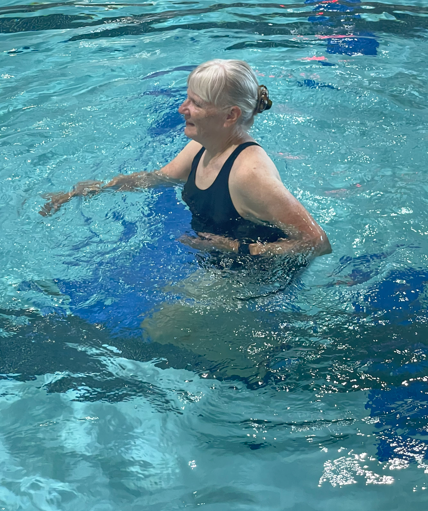
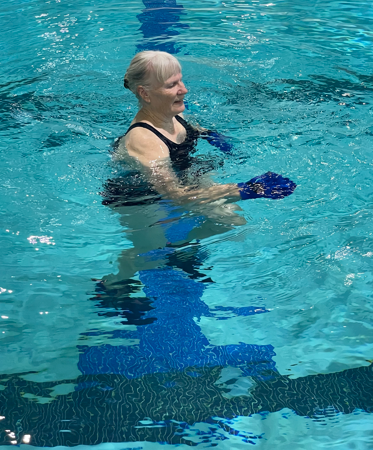
Shallow Water. Nearly every pool that offers water fitness classes has shallow water, which is defined as a depth between mid-rib cage to mid-chest for most participants. This provides the benefits of both reduced impact and grounding forces that allow participants to maintain proper alignment and control. Shallow water provides resistance in every direction of submerged movement, which means both muscles in a muscle pair are trained. People who are limited because of impact concerns from land based training are able to exercise at an intensity to improve fitness. People at higher levels of fitness can train at higher intensities without experiencing increased musculoskeletal stress. Shallow water exercise burns calories comparable to land exercise. Wearing shoes provides traction and can allow for a more intense workout that burns more calories.
You can exercise at five impact levels in shallow water. Level I is performed in an upright position. Level II is performed by flexing the hips and knees to submerge the body to shoulder depth. Level III is performed without touching the pool bottom. Grounded movements are initiated in an upright position, but one foot remains in contact with the pool floor at all times. Propelled movement, or plyometrics, is jump training. People with osteoporosis can benefit from propelled movement because it involves some weight bearing. People with arthritis often find it more comfortable to exercise in water than on land because of the reduced impact.
You can train for cardiorespiratory fitness by increasing range of motion, increasing speed, and accelerating. You can train for strength by pushing against the water resistance or using equipment. You can train for core strength and balance by exercising on one foot or in other less stable positions, such as a tandem stance. Any kind of aquatic equipment can be used in shallow water. This includes buoyant equipment, such as foam dumbbells and noodles; drag equipment such as webbed gloves, Aqualogix bells, fins, paddles and Aqua Ohm; rubberized equipment such as bands and resistance tubing; aquatic steps; aqua poles; and aqua drum sticks.
Deep Water. Fewer pools have a deep end, but those that do have seen a growth in popularity of deep water classes. Deep water exercise is performed at a depth that allows the participant to remain vertical while not touching the pool floor. A flotation belt should be worn for neutral buoyancy, which allows the participant to concentrate on working against the drag properties of the water as opposed to trying to stay afloat. Participants can move freely in all three planes of motion, creating a total-body workout, muscle balance and a substantial challenge for the core muscles without impact stress to the joints. Heart rates in deep water are lower than on land or in shallow water because of heat dissipation, hydrostatic pressure and limited gravitational forces. Research shows that there is no difference in oxygen consumption in spite of the reduced heart rate. When comparing land and water exercises, similar exercises performed at the same intensity require greater caloric expenditure in deep water.
There are no impact levels in deep water because there is no impact. However you can exercise in various positions. Upright is similar to Level I. Seated, as if sitting in a chair, is similar to Level II. Elevating the body with a scull is similar to Level III. Single leg moves while keeping the other leg vertically extended is similar to Grounded movements. Accelerated moves that propel the body upward by using the limbs to apply force against the water is similar to propelled moves. In addition you can challenge the core with off-axis moves, such as leaning diagonally to the side or forward. People with osteoporosis are advised to include resistance training in their routine, and you can certainly perform that in deep water; however it is advisable to also include weight bearing exercise, such as walking, if possible. Arthritis classes are offered in the deep end for those who appreciate a completely non-impact workout.
You can train for cardiorespiratory fitness in deep water by increasing range of motion, increasing speed, and accelerating. You can train for strength by pushing against the water resistance or using equipment. Maintaining neutral alignment works the core for the entire class period. Not all kinds of aquatic equipment are appropriate for deep water. The equipment must float if you don’t want to dive down to the bottom of the pool to retrieve a piece of equipment someone dropped. Buoyant equipment, such as foam dumbbells and noodles, and drag equipment that attaches to the body, such as webbed gloves and swim fins, work well. Drag equipment that floats, such as Aqualogix bells, and rubberized equipment can also be used. Aquatic steps; aqua poles; and aqua drum sticks can only be used in shallow water.
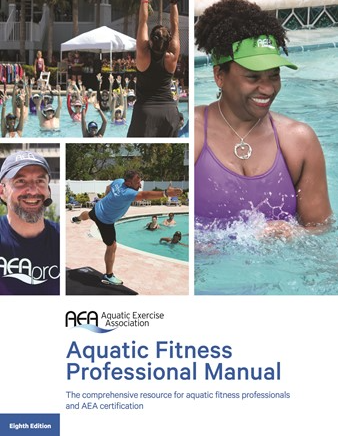
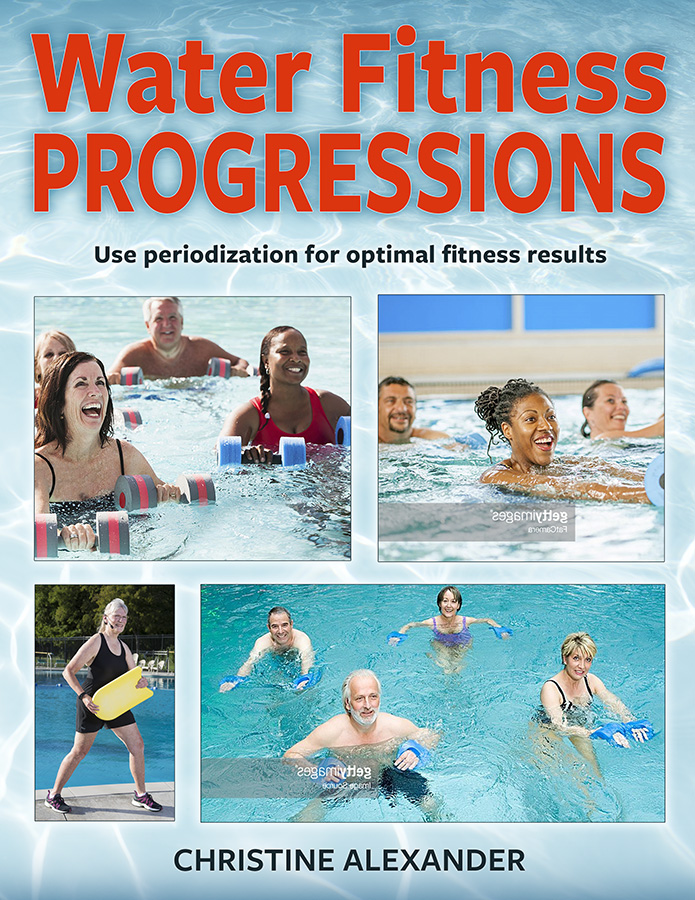
Conclusion. It comes down to personal preference. Some people prefer to have their feet on the ground/pool floor. Some prefer the freedom of movement in the deep end. There is no right or wrong answer. For more information about shallow water and deep water exercise, see the AEA Aquatic Fitness Professional Manual. For lesson plans for both shallow and deep water see my book Water Fitness Progressions.
See you in the pool, whichever depth you choose!

Chris Alexander
Leave a Reply