How to Fall Safely

More than one out of every four people 65 or older falls each year. One out of five falls causes a serious injury such as broken bones or a head injury. Over 800,000 patients a year are hospitalized because of a fall injury. Each year at least 300,000 older people are hospitalized for hip fractures. These statistics from the Centers for Disease Control and Prevention are a concern for many of my water exercise class participants and for me. When I came across some articles on How to Fall Safely, I decided the information was worth passing on.

I found articles from several sources, including AARP, physical therapist blogs and wikiHow. The pictures in this Blog post come from wikiHow. The co-author of the post was Chris M. Matsko, MD.
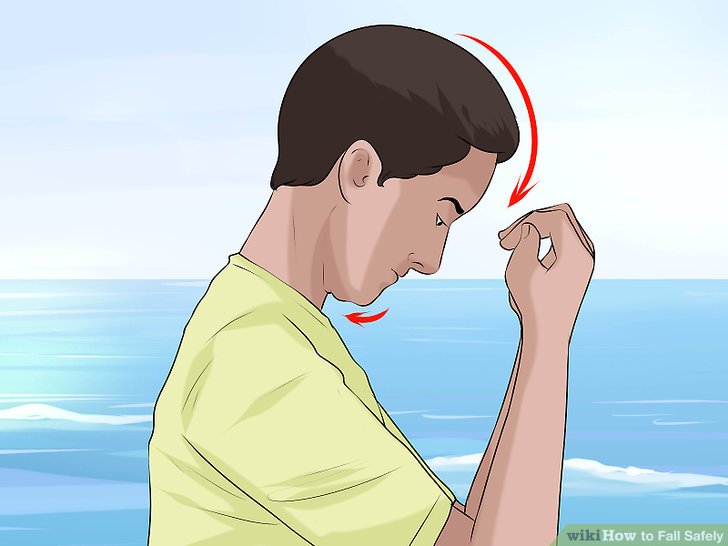
Protect your head. Head injuries can be very serious. Make sure you prioritize protecting your head. Tuck your chin down to lower your head. If falling face first turn your head to the side. Use your arms for additional protection. Put them in front of your head if falling forwards or behind your head if falling backwards.

Turn as you fall. If you are falling either straight forward or straight backwards, try to turn your body so you land on your side. This reduces the risk of injuring your head, face, arms or back.
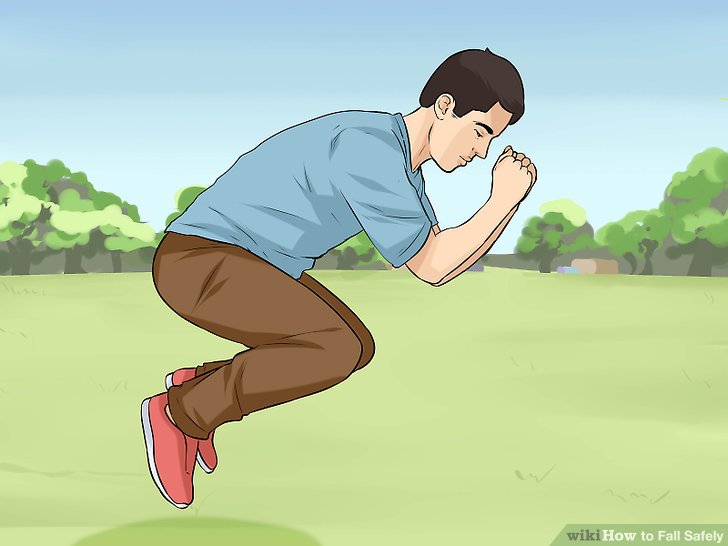
Keep arms and legs bent. It may be tempting to try and catch yourself with your arms. However, landing with your arms straight out can break your wrists and/or your arms.
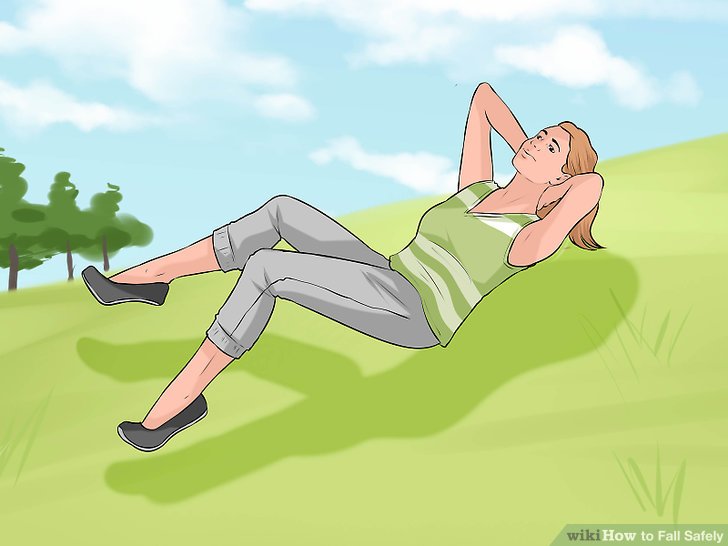
Stay loose. Tensing up increases the chance of sustaining an injury. The tense parts of the body are more likely to break. Try breathing out as you fall to help keep your body relaxed.
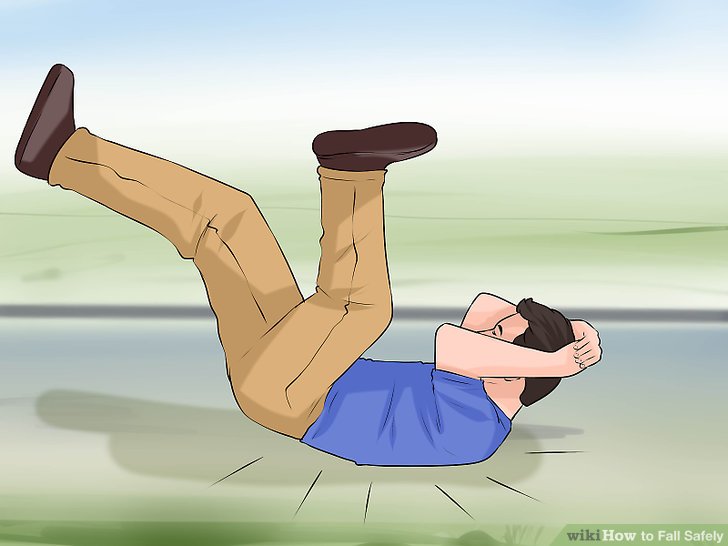
Spread out the force of the fall. A big part of falling safely is to spread out the force of the impact over a large area of your body. This reduces the risk of a serious injury to a single part of the body.

Another suggestion is to roll out of the fall. This is difficult to do unless you have practiced beforehand. If you wish to learn the technique, you can ask a physical therapist to show you how, or practice falling and rolling in a gym with padded and cushioned floors.

Just as important as knowing how to fall is taking steps to prevent falls in the first place. Wear shoes with slip resistant soles. Pay attention when you walk. Be aware of uneven areas on the ground, curbs and stairs. Hold the hand rail when taking stairs. In the home, close drawers after you are done with them. Don’t leave cords in walkways. Keep the area well lit. Use non-slip bath mats. Remove small throw rugs.

Another way to reduce your risk of falling is to improve your strength and balance with exercise. The pool is the perfect place to work on both strength and balance. Because the water’s buoyancy and resistance helps support the body, exercises can be done without fear of falling. Options include the following:

Gait training. Gait training is walking practice. The goal is to lengthen the stride and improve confidence while walking.
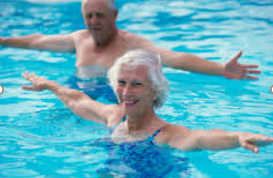

Core Strength Training. Core strength training is training for the postural muscles of the trunk. This includes the Trapezius and Rhomboids, the Latissimus dorsi and the Erector spinae. Exercises to try are rowing, bowstring pull, and lat pull-down using the water’s resistance or drag equipment. Walking backward strengthens the Erector spinae.
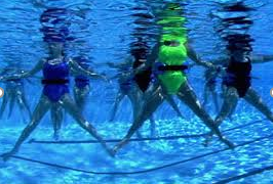
Deep-Water Exercise. Deep-water exercise is performed, while wearing a flotation device, in water in which a person can remain vertical without the feet touching the floor. Exercisers must aggressively engage the stabilizing muscles of the core to remain upright.
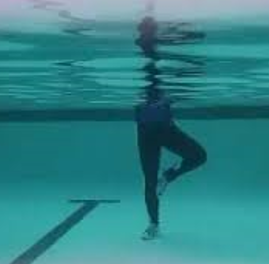
Balance Challenges. Balance challenges are exercises performed with a narrow base of support, such as the feet together, one foot in front of the other, or standing on one foot. Slow movements are more challenging than fast ones.

Falling is scary, but learning how to fall and taking steps to prevent falls in the first place are things we can all do now to reduce the risk.

See you in the pool!

Chris Alexander
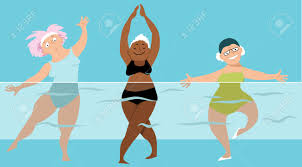
Have Fun in the Pool

pool-fun

Why it so much fun to exercise in water? It’s because getting into the pool means leaving the world of gravity and entering the world of buoyancy! Buoyancy is the upward force that water exerts on submerged objects. It makes you feel lighter. It takes the weight off your joints. It allows you to jump higher and land softly. It supports you and reduces any fear you might have of falling. It reminds you of the fun you had playing in the pool as a child.

Buoyancy is one of the properties of water that can be harnessed to increase the intensity of your exercise. Any movement toward the pool floor has to work against buoyancy. So instead of focusing on arm lifts, press those arms down, either from the front in a double-arm press-down or from the side in a lat pull-down. In a front kick, focus on pressing the leg down. When kicking side to side, focus on pulling the legs down toward center.

Buoyancy is not the only property of water that makes working in water different from working on land. Water offers more resistance than air and it slows movement quickly. This resistance is called drag resistance. If you increase the surface area you increase the drag resistance. You can increase the surface area by traveling forward with the arms stretched to the side or by traveling forward with the legs farther apart. Increase frontal resistance while traveling sideways by performing exercises that move front to back, such as cross-country ski.

When you push against the water, the water pushes back. If you push harder, the water pushes back harder. This hard pushing is called acceleration. If you push hard enough to double the speed of your movement, you have quadrupled the force. You can therefore control the intensity of your exercise by the amount of force you use with your limbs. It is important to maintain your range of motion with acceleration, since small moves are not as effective for increasing intensity.

When you move a limb in one direction, it will propel the body in the opposite direction. For example, if you sweep your arms to the right, the reaction is that the body moves toward the left. This is called action and reaction. Swimmers use this property of water with their swim strokes. In vertical water exercise we can take advantage of this property to increase intensity by using impeding arm or leg movements. Sweep your arms to the right and move right. Use an arm or leg movement that propels the body forward, but travel backward. Or use an arm or leg movement that propels the body backward, but travel forward.

It is important to understand the properties of water because they make aquatic exercise very different from working on land. They are tools that can be used to increase intensity. And they add to the fun of working out in the water!

See you in the pool!

IMG_4509

Chris Alexander

The Benefits of Water Exercise for Your Heart

heart rate Water exercise has many benefits, some of which were highlighted in my last Blog post. In this post I would like to focus on the benefits for your heart.
Your heart is a muscle, the most important muscle in your body. It beats 24 hours a day, 7 days a weak. Inactivity will cripple your heart! A normal resting heart rate ranges from 60-80 beats per minute. If you want to make your heart stronger, then you need to make it beat faster, which means you need to do aerobic exercise. Aerobic exercise brings the resting heart rate down. If you can lower your resting heart rate by as little as 10 beats per minute, you will be saving your heart approximately 14,400 beats in a 24-hour period.

Any aerobic exercise done on land or in the water can lower the resting heart rate. But exercising in the water has additional benefits for the heart. Just getting in the pool lowers blood pressure for most people. Blood pressure decreases because immersion relaxes the blood vessels so that they can carry more blood while presenting less resistance to the heart, which is pumping that blood. Decreased blood pressure lingers for a while after you get out of the pool. With regular aquatic exercise, the vessels themselves become more pliant and supple.

This occurs not only with healthy individuals. People with metabolic syndrome, who have a combination of cardiovascular disease risk factors, such as obesity, high blood pressure, high blood sugar, high cholesterol and high triglycerides, also tend to have stiffer blood vessels. The blood vessels become less effective in contracting and relaxing over time. In a study of 12 individuals with metabolic syndrome who participated in a deep-water exercise training program one hour a day, 3 days a week, blood vessel health improved in just 8 weeks. Obese individuals will often be more comfortable exercising in water because the buoyancy of the water supports their weight, and therefore they are more likely to continue with the program.

Blood pressure increases gradually and progressively with increasing age, resulting in a high prevalence of hypertension among older adults. Hypertension affects 3 out of 4 Americans over the age of 65. Hypertension can lead to heart attack, stroke, and other cardiovascular diseases. It is well known that land-based aerobic exercise can reduce blood pressure in patients with hypertension. A recent study confirmed that swimming at a mild to moderate intensity 3 times a week produced a clinically meaningful reduction in blood pressure in 2-3 months. This is because repeated workouts in the pool reduces stiffening of the blood vessels which is a primary factor that causes blood pressure to increase with age.

The hydrostatic pressure of the water pushes blood out to the extremities, and in combination with more supple blood vessels, stroke volume and cardiac output increases. This means that the heart becomes more efficient, pumping more blood with each stroke. Blood flow to the muscles during water exercise can increase an amazing 250%. Blood flow to the brain also increases, delivering more oxygen and nutrients to the brain cells. With this kind of blood flow, heart rate is lowered. Target heart rates while exercising in shallow water average about 7 beats per minute lower than the same intensity exercise on land. Target heart rates in deep water, where more of the body experiences the hydrostatic pressure of the water, average about 17 beats per minute lower than the same intensity exercise on land. The exact number of beats per minute depends on many factors, including the fitness level of the individual.

If you have chest pains while working out in the pool you need to stay in the water because the heart rate will go up when you exit the pool. Instead, alert the lifeguard so that he or she can assist you and initiate the emergency action plan if necessary.

Working out in the water has many benefits. The benefits for the heart include making the heart stronger, decreasing the resting heart rate, making blood vessels more supple, reducing blood pressure, and increasing stroke volume. If you would like to see summaries of the research on the benefits of water exercise on the heart or on any of the other benefits of immersion and water exercise, go to www.playcore.com/WaterImmersionWorks.html

See you in the pool!

IMG_4509

Chris Alexander

Benefits of Water Exercise

This is not the first time I have promoted the benefits of water exercise! But research is ongoing and the list of benefits is getting longer. Two organizations, the National Swimming Pool Foundation and Playcore, created a resource called Water Immersion Works in 2015. The document contains a series of research vignettes written by medical doctors and PhD’s who are studying the benefits of immersion.

Each contributing scholar discusses one benefit of water exercise. Their research concludes that water exercise:

  • Relaxes the blood vessels so they can carry more blood while presenting less resistance to the heart pumping the blood. With regular aquatic exercise, the vessels remain pliant.
  • Improves blood flow to the brain, which may preserve brain function for many years into the future.
  • Provides biological benefits for individuals with post-traumatic stress disorder.
  • Increases energy expenditure, which lowers all causes of mortality risk.
  • Strengthens low back muscles and reduces pain better than similar land-based therapy.
  • Promotes balance and fall prevention.
  • Is effective in improving physical fitness and body composition.
  • Offers impressive rates of energy expenditure and caloric burn.
  • Has an effect on attenuating bone resorption and enhancing bone formation.
  • Offers a lower weight-bearing option for performing high intensity interval training.
  • Is recommended for obese individuals who find water a desirable environment for increased physical activity.
  • Reduces blood pressure for patients with hypertension.
  • Reduces joint stress while improving vascular functioning for individuals with arthritis.

The research continues to evolve and further document the plentiful benefits of water immersion. If you are reading this Blog, you are already involved in water fitness. It is our job to promote these benefits to others. We also need to support the building and maintaining of public swimming pools with our votes and our tax dollars, because doing so promotes our nation’s health.

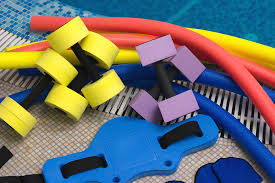
Aquatic equipment

If you would a copy of the Water Immersion Works document, go to www.playcore.com/WaterImmersionWorks.html 

If you would like to sign up for one of my water fitness classes, check out my schedule on my website at www.waterfitnesslessons.com

See you in the Pool!

IMG_4509

Chris Alexander