
Book Reviews

The holidays are coming soon, and if there are water fitness instructors or fitness enthusiasts on your gift list, here are some books you might want to consider purchasing for them. The name of the book is a link to order.
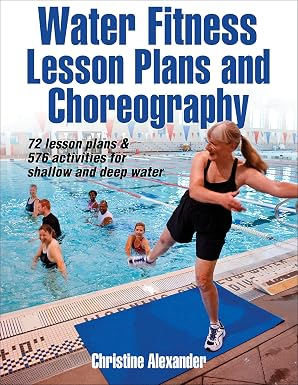
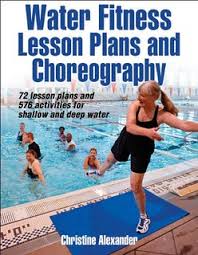
Water Fitness Lesson Plans and Choreography by Christine Alexander. I wrote this book 16 years ago and I still haven’t seen anything published that is similar. It was written to help new instructors learn the basics of class organization and keep veteran instructors out of the proverbial teaching rut. It has 36 lesson plans for shallow water exercise and 36 lesson plans for deep water exercise. The lesson plans include a warm-up, a main set, and a cool-down, plus a teaching tip. There are a total of 576 exercises described accompanied by 253 photos that depict the key features. The two sets of lesson plans correspond, so if you are teaching both shallow and deep water classes, all you have to remember are the specific exercise modifications to take the routine from one end of the pool to the other. This allows instructors to learn, remember, and feel comfortable offering a variety of class formats. Available for $35.06 on Amazon.
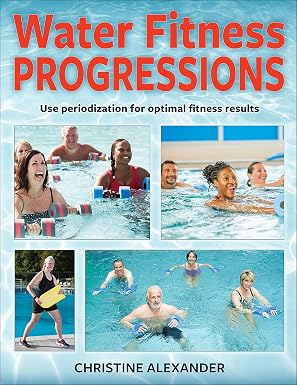
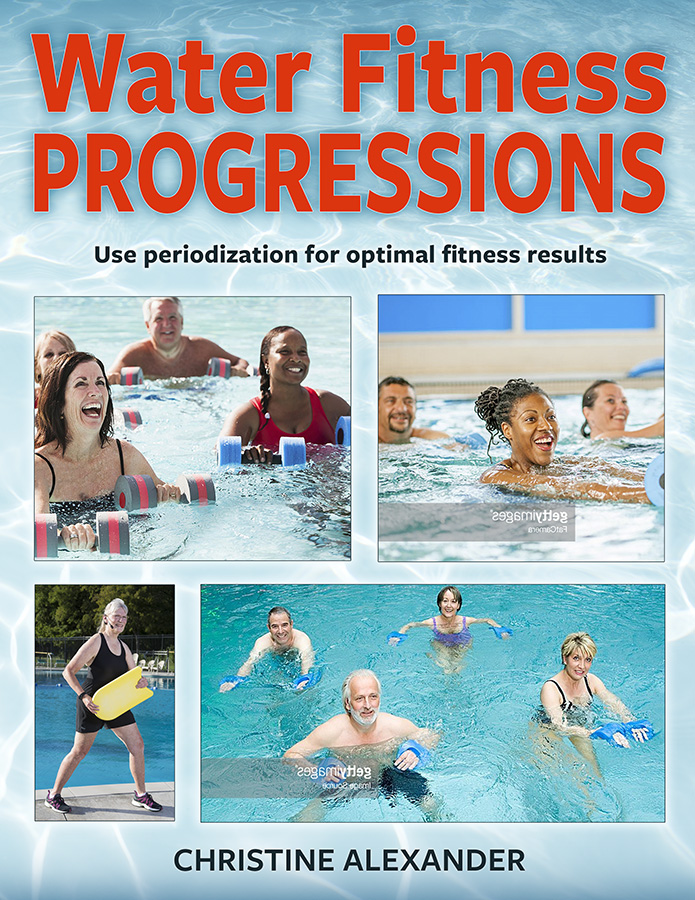
Water Fitness Progressions by Christine Alexander. I wrote this book for instructors who want to take the next step in their lesson planning. Scientific research tells us periodization is an important training technique that organizes fitness sessions into specific cycles. The benefits are continuous improvement leading to consistent performance gains, allowing participants set and achieve both short-term and long-term goals. Periodization helps prevent injury by minimizing the risk of overtraining because it includes recovery periods essential for muscle repair and growth. The lesson plans in this book are organized in cycles of pre-season, transition season, peak fitness and active recovery. Continuous aerobic training, interval training, and strength training options both with and without equipment are included. This is periodization made easy. Available for $42.00 on Amazon.
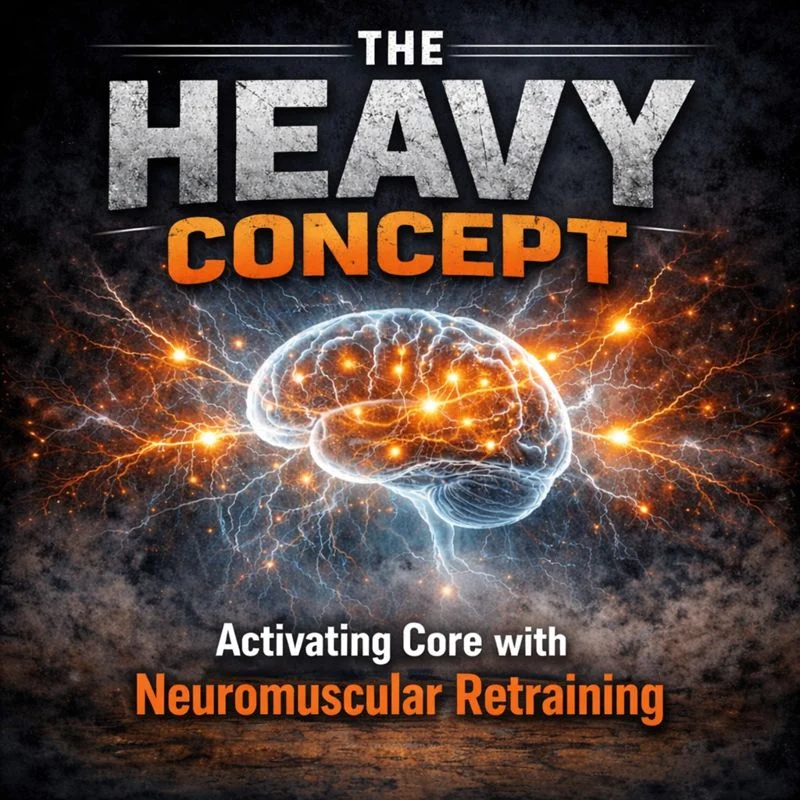
The Heavy Concept by Christine Alexander and Ruth Sova. This book describes how to train your deep core stabilizers. The big superficial muscles may get all the glory because they create visible movement and shape. But the deep muscles are the silent engineers that make powerful, pain-free efficient movement possible in the first place. You can feel them activate by sitting in your chair and trying to lift one knee while imagining that it is too heavy to lift. Try to lift it with all your might without letting your body lean. The quiet stability you feel in your trunk is your long-lost stabilizers waking up and doing their job. I like to use the heavy concept in my water fitness classes to help participants feel their stabilizers before we pick up the foam dumbbells for strength training. Available for $24.95 on DSL LTD.
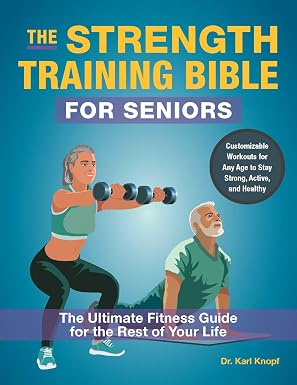
The Strength Training Bible for Seniors by Dr. Karl Knopf. Strength training is essential to prevent sarcopenia, the gradual loss of muscle mass, strength and physical function that can make everyday activities harder, leading to frailty. Dr. Knopf’s book includes stretching exercises, core strength exercises, weight and resistance training exercises, and kettlebell exercises designed for people 50 years old and older. Many of the exercises use no equipment. Some use dumbbells, exercise bands, foam rollers, stability balls, or kettlebells. All of these are fairly inexpensive and you can use them at home. Every exercise has complete photo illustrations making them easy to understand. There are also sample programs for people with arthritis, back pain, breathing conditions and more, or you can put together your own strength training session. I have used this book myself and I can definitely recommend it. Available for $20.08 on Amazon
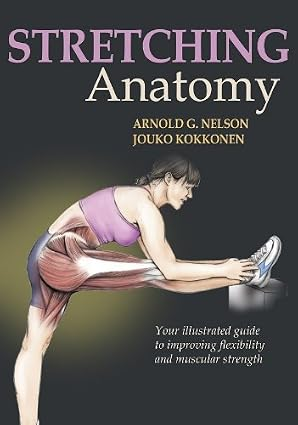
Stretching Anatomy by Arnold G. Nelson and Jouko Kokkonen. I found this book fascinating. It describes stretches for the neck; the shoulders, back, and chest; the arms, wrists, and hands; the lower trunk; the hips; the knees and thighs; and the feet and calves. Each stretch is illustrated with a drawing showing how to do the stretch. The fascinating part was that most of the drawings showed the muscles that were being stretched, both the most-stretched muscles and the lesser-stretched muscles. There were additional drawings of the muscles which were all labeled. I appreciated being able to see the muscles in action, as opposed to the usual static figure standing in the athletic stance. I am not able to get into every stretching position, but I have used many of the stretches following my strength training workouts out home, and even some at the end of my water fitness classes. Available for $9.23 on Amazon, as well as a newer version which I have not purchased for $23.21.

Find Your Balance by Ruth Sova. Ruth wrote this book as a practical guide for individuals. It explains how to assess your balance and interpret your assessment results so that you know where you stand. Then she explains exercise progressions for seated balance development and standing balance development. You start where you currently are, based on your assessment results, and work your way through the program from there. You can then take your balance exercises to the pool, which is the perfect place to work on balance because the water’s buoyancy supports you and takes away the fear of falling. You are never too old to improve your balance. Available for $19.00 on DSL LTD.
Balance and Fall Prevention by Ruth Sova. This book was written for aquatic professionals, and it goes into more detail than the book for individuals. It describes how to assess your client’s balance if you are an aquatic therapist and provides training progressions that go from seated balance to standing balance to balance in daily life. There are sections on aquatic exercise progressions that aquatic therapists and even aquatic fitness instructors can use. You can’t just improve your balance and then you have it for the rest of your life. It must be maintained. So there is a section on creating your personal lifelong balance plan, which your client can practice at home or in their water fitness class. I can’t say enough good things about these two books! Available for $49.95 on DSL LTD.

These are some of the books on my book shelf that I refer to frequently. You might know someone who would appreciate a copy. If there is a book you would like to add to this list, let us know about it in the comment section below.

See you in the pool!

Author/Instructor Photo

Chris Alexander
Leave a Reply

Your email address will not be published. Required fields are marked *

Pool Equipment: Deep-Water Belts

Some people believe they work harder in a deep-water class if they don’t wear a belt. Well, they might work harder trying to tread water, but what does their posture look like? They either lean forward, or their legs drift toward the surface of the water, trying to create a larger surface area that assists flotation. All exercise is properly performed with good postural alignment, that is, with the head over the shoulders, the shoulders over the hips and the feet under the body. In good alignment without a deep-water belt, you sink. What about using a set of foam dumbbells in the hands to assist with flotation? If you do that, you are hanging your body weight from your shoulders which is not a good idea because the shoulder joint is not a weight bearing joint. You are also causing impingement to your rotator cuff and repeated impingement can cause a rotator cuff tear. (See my blog post on the shoulders.) You could try straddling a noodle. That limits the number of exercises you are able to do, and for me, having to repeatedly adjust the noodle is a distraction. Wearing a deep-water belt allows me to perform multiple exercises, in different positions, in good alignment, with no stress on my shoulder joint, while increasing and decreasing intensity at will. I can safely add any piece of equipment I choose because I am supported by my belt and not hanging from the equipment.

The best deep-water belt is one that feels comfortable for you and allows you to maintain good postural alignment. There are a wide variety of belts to choose from. Here are some of the options:

Hydro-Fit Classic Wave Belt. $59.95 in sizes S, M, L, and XL. Hydro-Fit was founded by Craig Stuart in 1987. You can’t go wrong with Hydro-Fit equipment. The belt is made of soft and durable EVA foam that forms to the natural shape of your body. It really is durable! I’ve had mine for years. If the strap or buckle wears out, you can get a replacement strap. (My strap hasn’t worn out yet.) There is a sizing chart on the website to help you choose the correct size. I like that it has even buoyancy around my waist so that I feel balanced in the water. Hydro-Fit also has an easy close Wave belt with a Velcro closure for those who have difficulty with the buckle. And they have a Wave belt pro with less buoyancy for a more challenging workout.

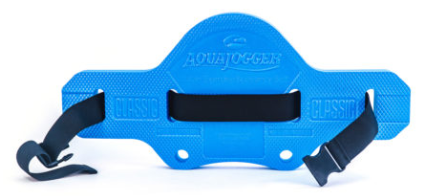
Aquajogger Classic Belt. $59.95. Aquajogger was founded in 1987. The company says that the contour design tones the abdominal muscles while strengthening the lower back. The extra buoyancy in back tends to pitch me forward a little bit, but is good for those whose bodies have extra buoyancy in front. The belt comes with a 48-inch elastic strap. The strap tends to stretch out over time, but replacement straps are available. Instead of sizes, Aquajogger belts come in 8 different shapes ranging from least buoyant to most buoyant, and ranging in price from $49.95 to $69.95.

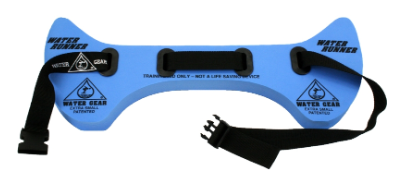
Water Runner Flotation Belt. $45.99. This belt is made by Water Gear which has been in business since 1994. It is made of soft, comfortable, closed cell EVA foam, which does not chip, break or absorb water. The strap is made of nylon, and replacement straps are available. The belt comes in size X-SM (under 100 lbs.), S (100-160 lbs.), MED (160-220 lbs.), and LG (220+ lbs.). The patented design is said to float the individual in the proper vertical position, relieving stress on the lower back. I find the wings on the side to be uncomfortable, but some people like them.

Speedo Aqua Fitness Jogbelt. $38.00. Speedo is an Australian company that has been around for over 100 years. They sell everything from swimsuits to goggles. Their deep water belt comes in size S-M which adjusts to waist sizes 25-48 inches, and size L-XL which adjusts to waist sizes 25-56 inches. That means that the foam part is one size and it is the strap that adjusts the fit. That may make the curving of the foam belt uncomfortable for some. The belt is made of soft chlorine resistant foam and it has a 6-month warranty against deficiencies in manufacturing. It is more affordable than some of the other deep-water belts, but it does not last as long.

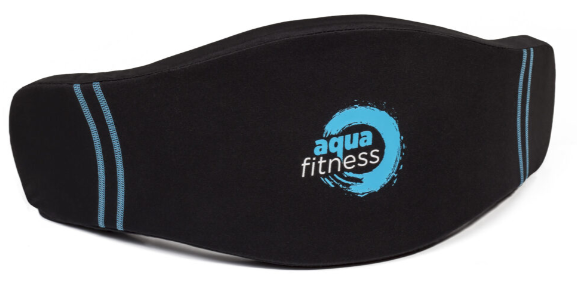
Aqua Fitness Deluxe Flotation Belt. $27.99. This belt is made by Aqua-Leisure, a company founded in 1970. The belt is currently out of stock on their website, but you can find it on Amazon.com for $25.87. It is made out of EVA foam with a fabric cover that is designed to be soft on skin for less irritation. The strap adjusts to fit a 20-60 inch waist, which means it is one size fits all. Its slim design may not provide enough buoyancy for some adults. The brand recommends that the belt not be exposed to harsh sunlight for too long, but that is not a problem in an indoor pool.

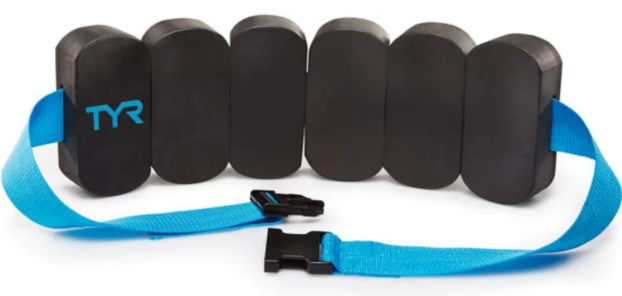
TYR Aquatic Flotation Belt. $37.43. TYR was founded in 1985. The blocks are made out of EVA foam, and the strap has an adjustable belt and clip system. The belt fits waist sizes 27-52 inches. You can slide the blocks around the strap so that you can have 2 blocks in the back, one on each side, and 2 in the front. Or have them all in back, or any other adjustment that works for you. The blocks are narrow and some people might need more than six to get enough flotation.

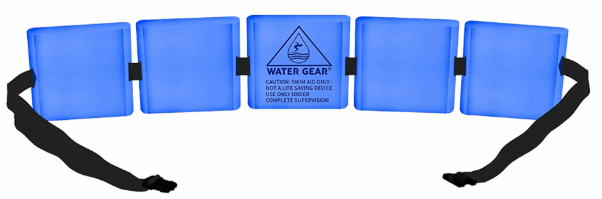
Water Gear also makes a block belt for $27.99. The blocks are made of closed cell EVA foam. The Water Gear blocks are larger than the TYR blocks which makes this belt a little more buoyant. Blocks can be removed to adjust the buoyancy for those who have a smaller waist or prefer less buoyancy. The strap is 2 inches wide and 60 inches long, with an adjustable buckle. Replacement straps are available.

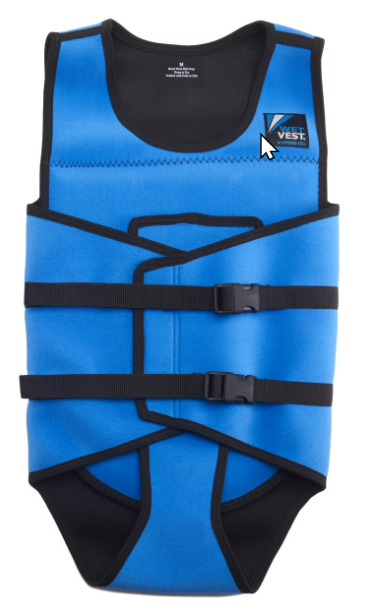
Wet Vest. For those who are serious about sports conditioning, cross training or aquatic therapy, Hydro-Fit makes the Wet Vest for $244.95.  Its patented design incorporates flotation panels sewn into a comfortable and snug fitting body vest. Like a wet suit, it provides a thermal layer that insulates your body in the water. The wet vest works great for people who are uncomfortable wearing a belt around the waist due to injury or other medical issues, which is why it is often used by aquatic therapists. The Wet Vest allows maximum freedom of movement. It comes in blue or black, in sizes small, medium, large, X large and XX large.

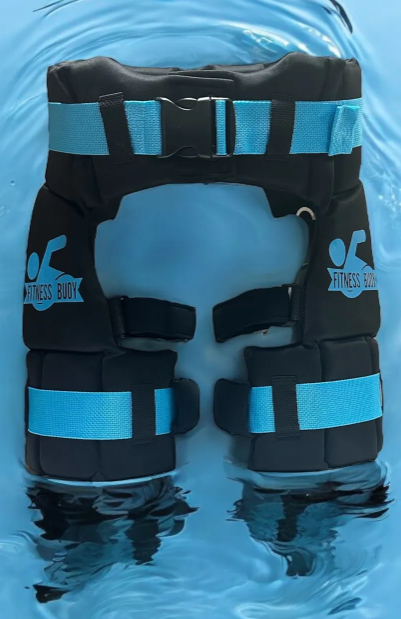
Fitness Buoy. Buoy Products sells the Fitness Buoy for $59.95. Buoy Products is a relatively new company, founded in 2017, and their Fitness Buoy is a new concept in flotation devices. They also make a Body Buoy which is similar to the Fitness Buoy, but in grey and 5 other bright colors. The price of the Body Buoy is the same as the Fitness Buoy. They comes in sizes small, medium, large and X large. The equipment is designed to be worn like shorts and fasten around the waist and legs. They advertise that you can comfortably do full range of motion movements in deep water without your device digging into your ribs or riding up to your armpits.

There are other deep water belts out there. Let me know if you have a favorite that I did not mention, or if you are a fan of one of the pieces of equipment in this post. Whatever you do, put one on before you take your deep-water class. See you in the pool!

Author/Instructor Photo
Chris Alexander
← Back

Thank you for your response. ✨

Pool Equipment: Shoes

Shoes are an essential piece of equipment for anyone taking a water fitness class. They protect your feet from cuts and scrapes if the pool floor is rough, and help prevent you from slipping if the tiles on the pool floor are slick. You would not think of taking a land aerobics class barefoot; you would want to wear shoes that provide support and stability, and the same is true for pool exercise. Although water aerobics is low impact, there is still impact during jumping exercises, and shoes provide extra cushioning. They also add resistance against the water, increasing the workout for your leg muscles. Shoes are especially important for people with diabetes, neuropathy, arthritis, joint replacements, plantar fasciitis and other foot or leg injuries. See Laurie Denomme’s blog post on wearing shoes. I wear shoes even in my deep-water class because I like the extra resistance they provide for my legs, and they make using the pool ladder so much easier on my feet.

Water shoes have come a long way since the days we bought water socks from the discount store. They now come in a wide variety of styles and colors. When looking for shoes to wear in your water fitness class, you want to make sure they are comfortable, have a good grip on wet surfaces, and provide support for your feet and ankles. They should be made of quick drying materials. Many manufacturers advertise that you can wear their shoes for a variety of water sports and take them from the pool to the beach to the trail. You do not want to do that with your water aerobics shoes. Put them on at the pool and remove them after your class. Wearing the shoes to the beach or the trail or the parking lot means that they will pick up dirt, grass, oil, grease and who knows what else that you don’t want contaminating the pool water. Well known brands include Ryka, Speedo, Addidas, and Aleader. There are many other brands and styles available at a wide variety of prices. Look for water shoes on the brand’s website, or on Amazon.com, Swim Outlet, H20 Wear, or Lands’ End. If you order online, be sure you can return the shoes if they do not fit properly. Here are four of the more popular brands:

RYKA

Ryka makes the Hydro Sport Water Shoe in 5 colors and sizes 5-12. They cost $69.99 on their website, and all 5 colors are in stock. You can get them on Amazon.com for $69.95. They are suitable for all water activities including water aerobics because they have multi-port drainage systems, quick-drying fabrics, and sticky rubber soles for extra traction on wet surfaces. Plus they are machine washable. They were the first brand to create athletic shoes specifically for a woman’s unique foot shape, muscle movement and build. They have a wider forefoot for extra stability, a narrower heel for a more secure fit, and shock absorption meticulously tested for bounce, flexibility and energy return, as well as cushioning fine-tuned for a woman’s body weight. I wear Ryka shoes because I love the fit. They are rated 4.5 stars.

SPEEDO

Speedo makes the Women’s Surfknit Pro Watershoes in 11 colors and sizes 5-11. They cost $45 on their website, but as of this writing only the gray (pictured) is in stock. However 8 colors are available on Amazon.com for $31-$45 depending on the color. I’ve actually had more luck ordering Speedo products on Amazon rather than on their website. The Surf Knit Pro features advanced technology resulting in a more comfortable, breathable upper with plenty of support where needed. A water-resistant insole is combined with a unique outsole that disperses water flow for extra traction so you can safely perform in and out of the pool. They are rated 4 stars. Speedo also makes a Surfknit Pro Watershoe for men with limited availability.

ADDIDAS

Addidas makes the Terrex Boat Slip-On Climacool Shoes in 2 colors. They are unisex, and sizing runs 5.5-15 for women and 4.5-14 for men. They cost $80 on their website and $79.95 on Amazon.com. They are advertised as amphibious, meaning they are designed for water sports or hiking or even everyday wear, but of course if you are wearing them for your water fitness class you will not use them for everyday. They are made of CLIMACOOL material that wicks sweat. They are slip-ons with a snug, sock-like fit with a quick drying upper and grippy outsole for confident grip on slippery surfaces. They are rated 4.5 stars.

ALEADER

Aleader makes the Xdrain Fresh slip on water shoes in a sporty style that comes in 4 colors and sizes 6-11. The price is $29.99 on their website and $19.99-$24.99 on Amazon.com, depending on the color, and not all sizes are available. Aleader also has another style called the Xdrain Classic Knit for $26.99. These come in 5 colors and sizes 6-10. Both shoes feature a cushion Xdrain midsole and a water drain outsole designed for excellent drainage, breathability, and non-slip flexibility. The upper is made of quick dry mesh. All that breathability makes the shoes extremely lightweight. They are rated 4.3 stars.

These are some of the other options that you can find on Amazon or at Lands’ End:

  • Suokeni quick drying slip on water shoes for beach or water sports $19.99 Rated 4.5 stars.
  • L-Run Barefoot aqua swim walking shoes for men and women $25.49 rated 4.4 stars.
  • Simari water shoes for men and women, $21.98-$24.98, rated 4.5 stars
  • Columbia women’s Drainmaker XTR water shoe, $80.00 rated 4.2 stars
  • Frogg Toggs women’s short fin premium water draining quick-drying sport shoe, $39.12-$49.99 rated 4.4 stars
  • Yalox Water Shoes for swimming and Yoga, $19.96 rated 4.5 stars
  • Hiitave women’s water shoes quick dry barefoot, $26.99 rated 4.5 stars
  • RocSoc women’s summer barefoot woven fabric water sport aqua shoes, $31.41-$32.00 rated 4.1 stars
  • Lands’ End women’s sport slip on water shoes, $39.95 rated 4.6 stars

That is a lot to choose from! If you have a favorite water shoe brand that I have not included, let me know!

See you in the pool!

Author/Instructor Photo
Chris Alexander
← Back

Thank you for your response. ✨

Aquatic Fitness Resources

Whether you teach water fitness classes, work as an aquatic therapist, or attend a class or session as a participant, there are certain things that you need to have. Instructors need certifications, continuing education, and sometimes help with lesson planning. Everyone needs swimwear and shoes they can wear in the pool. Fitness equipment designed for the aquatic environment is a must. Music is a great motivator used in many classes. The purpose of this article is to provide you with information and reviews for a variety of these resources as well as links to websites where you can purchase them.

Certifications

Ruth Sova

The Aquatic Exercise Association (AEA) was founded by Ruth Sova who then went on to found the Aquatic Therapy and Rehab Institute (ATRI). The two organizations recently merged. AEA’s certification is accepted in many countries around the world. AEA recommends that you get at least 6 months experience before applying for the certification. Their Aquatic Fitness Professional Manual costs $68. Their online exam is $165. The optional (but highly recommended) online prep course is $209. The certification is good for 2 years. A minimum of 15 continuing education credits (CECs) is required to renew. ATRI offers a certification for people interested in aquatic therapy, rehab and therapeutic exercise. AEA members get Akwa magazine, with excellent articles on aquatic fitness. You don’t need an AEA certification to become a member.

John Spannuth

The United States Water Fitness Association (USWFA) was founded by John Spannuth. It was the first organization to offer a certification for water fitness instructors. The certification is a home study course, costing $277. When you sign up, they send you the National Water Fitness Instructors Manual, an open book test and some forms to fill out. You have to teach a section of an experienced instructor’s class and then both of you fill out an evaluation. The certification is good for 3 years. You take another open book test to renew. The USWFA offers additional certifications: the Aquatic Directors certification, the Deep Water certification, the Aquatic Fitness Personal Trainers certification, the Aquatic Wellness Coach certification, and the Water Walking Instructors certification. The Aquatic Directors manual addresses the issues facing aquatic facilities in the post-pandemic period.

Sara Kooperman

SCW was founded by Sara Kooperman as a series of Mania fitness pro conventions in the Midwest, Dallas, Boston, D.C., California, Florida and Atlanta. The conventions offer continuing education training for land fitness instructors and personal trainers as well as aquatic fitness instructors. SCW expanded to offer certifications in Aquatic Exercise, Group Exercise, Personal Training, Active Aging and many more. The Aquatic Exercise certification is an online course costing $199. It is good for 2 years and requires 20 CECs to renew. SCW created WaterinMotion, a pre-choreographed, quarterly-released group exercise program that refreshes the moves and music every 3 months. You can also sign up on the SCW website for free webinars, Spotlite e-news, and Tidal Waves e-news.

Other organizations that offer certifications which are less well known are Aquatic & Fitness Professionals and WaterART. Zumba offers an aquatic Zumba certification.

Continuing Education

AEA offers both in person and online continuing education. The International Aquatic Fitness Conference (IAFC) is held in May and they offer CEC trainings in locations around the country. Check their website for a calendar of events. In addition to their Mania fitness pro conventions, SCW offers CEC video courses in the SCW Store on their website. Laurie Denomme has created a Water Exercise Coach program that teaches you how to lead workouts to get your students results. Exercise Etc. Inc. offers online education on a variety of fitness topics. It’s an easy way to collect the last few CECs needed to renew a certification. Mark Grevelding founded Fitmotivation, an aquatic video streaming service. The basic plan costs $14.95 a month, and the premium plan costs $24.95 a month. Two or three new videos are added every month. Some of the videos include AEA online quizzes worth continuing education credits that you can take for $20 with the basic plan or $10 with the premium plan. If you just want to stream videos to work out in your backyard pool, Mark offers a program for that too, Pool Fit.

Books

Some people like having a book to refer to when they need ideas. I wrote 2 books on water exercise each published by Human Kinetics. Water Fitness Lesson Plans and Choreography (2011) was written for water fitness instructors. It has 36 class ideas for shallow water exercise and 36 ideas for deep water exercise. Individuals may find the exercise descriptions and photos in Chapter 2 and Chapter 5 useful for building a personal exercise routine. Water Fitness Progressions (2019) was written for water fitness instructors and aquatic personal trainers. It describes how to use periodization to help class participants and clients progress in their level of fitness. It contains lesson plans that illustrate how to progressively increase intensity for both cardiorespiratory endurance and strength training. Gregory James Keyes has written Aqua-I-Cue: The Quintessential Aquatic Exercise Sports Science Reference Manual, which offers a wealth of information covering topics found in certification manuals and much more. It is available as a download on Amazon.

Swimwear

Your swimsuit is your most basic piece of aquatic fitness equipment, and there are many websites where you can order them. These include, in alphabetical order: D&J Sports, Dolfin, H20 Wear, Kiefer, Lands End, Speedo, Splash International, Swim and Sweat, Swim Outlet, SwimSuits for All, TYR, and Xtreme Swim. H20 Wear has been making the longest-lasting, chlorine-resistant swimwear available for 33 years, and they also sell apparel and water shoes. SwimSuits for All sells swimsuits for a variety of body types. TYR makes swim jammers for men. For a review of the 20 best athletic and sporty swimsuits that are flattering and functional for women, published in May 2021, check out Prevention.com. And for men, Sports Fitness Advisor wrote a review of swim jammers in August 2021.

Water Fitness Shoes

One of the best known women’s shoe for water fitness is made by Ryka. They are designed specifically for a woman’s foot. But men are taking water fitness classes too, and there are many companies that make water fitness shoes. Shoes Grow – Step Up in Life posted an article called The Best Shoes for Water Aerobics. Another review of water shoes was posted by Surfango.

Aquatic Fitness Equipment

Foam dumbbells, pool noodles, drag equipment, and deep-water belts are some of the types of equipment made for aquatic exercise and aquatic therapy. Craig Stuart was the first to make foam dumbbells, starting Hydro-Fit to sell them. Hydro-Fit also makes webbed gloves, pool noodles, deep-water belts, cuffs, apparel, and equipment for aquatic therapy. I have to admit that I am a big fan of Hydro-Fit. I am especially fond of the webbed gloves. Everything I have purchased from them is of good quality, and lasts a long time. The only place to buy Hydro-Fit products is from their website. Drag equipment is a good training choice, and the drag equipment I like best, other than webbed gloves, are Aqualogix bells. Aqualogix also makes fins to increase drag resistance on the legs. Another interesting type of drag equipment is the Aqua-Ohm, created by Irene and Marco, a couple of aquatic physical therapists. Other sellers of aquatic fitness equipment are, in alphabetical order: Aquajogger, Hydro-Tone, Sprint Aquatics, Water Fit, Theraquatics, and Water Gear. Some of the websites that sell swimsuits also sell equipment, including D&J Sports, Kiefer, Splash International, Swim Outlet, and Xtreme Swim. Best Reviews posted an article in September 2021 on their picks for the 5 Best Aquatic Dumbbells. You might also want to check out the post in Your Swim Book on the Five Best Pieces of Water Exercise Equipment for Crushing Your Pool Workouts.

Music

Many people wouldn’t think of exercising without music! If you are teaching a class, you want to use music created especially for fitness classes, using the appropriate beats per minute. Yes Fitness Music lets you purchase individual playlists, or you can have unlimited access to their entire fitness music library with a Yes!Go Subscription plan, costing $149.95 for a year or $14.95 a month. Dynamix offers pre-mixed albums or you can create your own custom downloads. Fit Mix Pro offers custom mixes only. Muscle Mixes Music and Power Music offer pre-mixed playlists. If you are interested in a microphone, the only waterproof mic on the market is the Evo sound system available at Special Projects Audio by Galaxy.

If I missed one of your favorite vendors, put a comment at the bottom of this article. See you in the pool!

Author/Instructor Photo
Chris Alexander
Ai Chi for Deep Water

Ai Chi (“energy of love”) is a water exercise and relaxation program that combines deep breathing and slow, large movements, performed in continuous, flowing patterns. It was created by Mr. Jun Konno of Japan and further developed my Ms. Ruth Sova in the United States. The YouTube video above shows Mr. Konno demonstrating Ai Chi.

Ai Chi, performed in shallow water, is so wonderfully relaxing that I wanted to try it with my deep water classes. This required modification, since weight shifting is not possible while suspended in deep water. I will present my modifications on Ai Chi Day, on Sunday July 25, 2021. The Zoom conference lasts from 8:00 AM – 12:00 noon EDT (7:00 AM – 11:00 AM CDT). There will be 18 presenters, including Jun Konno and Ruth Sova; my presentation is 10:10 – 10:19 AM EDT (9:10 – 9:19 AM CDT). If you are interested in attending, you can contact Ruth Sova at ruthsova@ruthsova.com for more information.

I am excited about presenting. Here is a preview of Ai Chi in deep water:

Contemplating
Floating
Enclosing

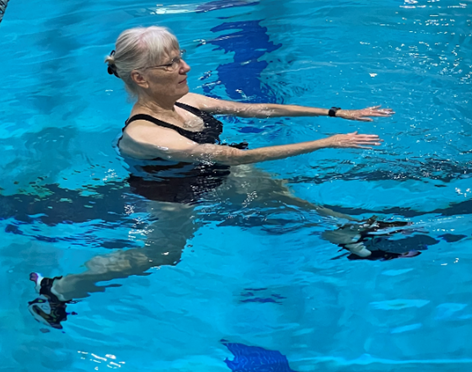
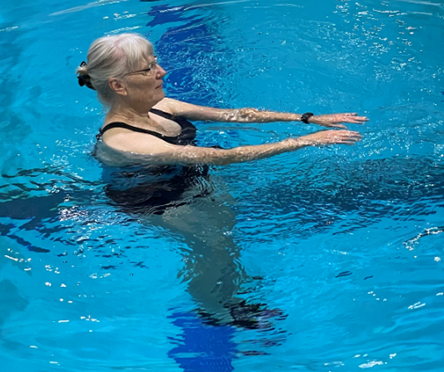
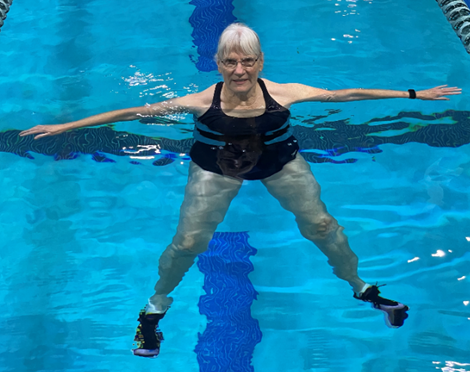
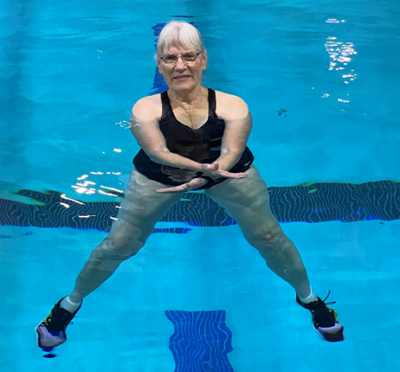
The first stage of Ai Chi is called Contemplating and it is a preparation for the moves to come. your body is in an upright posture with the spine in neutral and the legs apart. The arms are out to the sides near the surface of the water. Focus on your breathing. Inhale through the nose and exhale through the nose and mouth. Become aware of how your body rises and falls in the water. Then begin the first sequence, a series of four moves called Floating, Uplifting, Enclosing and Folding, which focus on breathing. They feature a series of arm moves. Most of the upper body moves work well in deep water, but upward movement, such as the front shoulder raise in Floating, tends to make the body sink. You can avoid sinking by turning the thumbs up and slicing through the water.

Gathering
Accepting

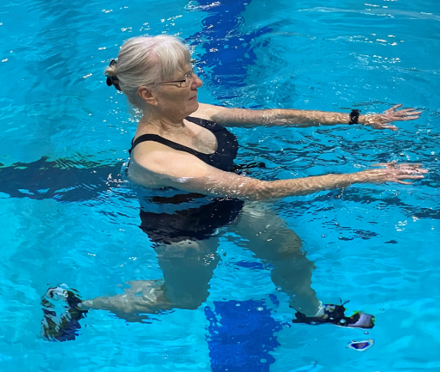
The second Ai Chi sequence focuses on healing, and includes exercises for the upper body and trunk stability. You will need to brace your core to stabilize in deep water. Webbed gloves can also help with stability if necessary. The movements in this sequence are called Soothing, Gathering and Accepting. The moves begin with a turn to the side. In deep water you will use a scull to assist in turning. The legs stay apart in a suspended lunge position while the arms sweep and flow. After you perform several repetitions of a move on one side, you turn to the other side and repeat the repetitions.

Balancing Begin
Balancing
Balancing

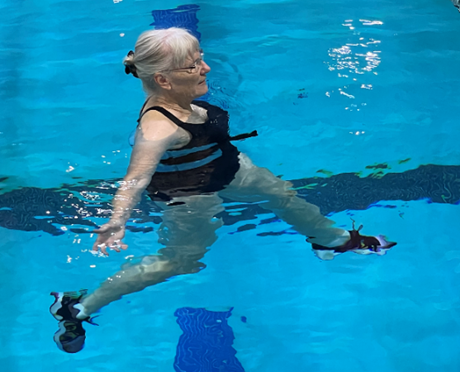
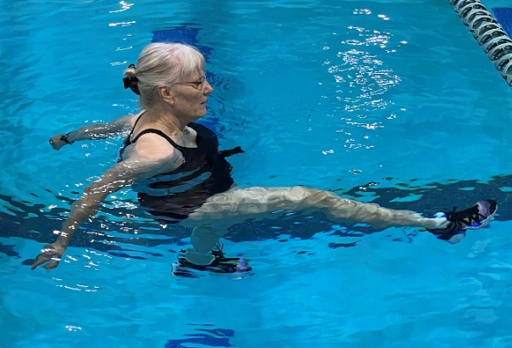
The third Ai Chi sequence is called healing and it focuses on the lower body. The moves are called Accepting with Grace, Rounding and Balancing. To get into position you turn to the side using a scull which puts the legs in a suspended lunge position. From there you need to drop the legs into neutral or the lower body movement tends to become a slow cross-country ski. Instead, brace the core and move one leg to the back, or to the front, or swing it front to back as in Balancing (in the photos above) while the arms sweep and flow. After performing several repetitions of each move on one side, turn to the other side and repeat the repetitions.

There is no right or wrong way to perform Ai Chi. Whatever adaptions you make, including deep water adaptations, will make it right for you. See you in the pool!

Author/Instructor Photo
Chris Alexander