The Human Kinetics Library is a digital hub for sport and exercise studies featuring more than 150 eBooks and a range of videos. Human Kinetics teamed up with Bloomsbury Digital Resources to build on their mission to increase the knowledge, enhance the performance and improve the health and fitness of all people around the world. This collection is dedicated to the research, teaching and understanding of the kinesiology and exercise science disciplines. It is marketed to institutional libraries to be used by university faculty, staff and students.
The Human Kinetics Library covers a range of subjects including:
Active aging
Anatomy and biomechanics
Exercise and sport science
Exercise prescription, instruction, and assessment
Fitness and health
History, sociology, and philosophy of sport
Motor behavior
Nutrition and healthy eating
Physical activity and health
Physiology of sport and and exercise
Recreation and leisure
Research methods, measurement and evaluation
Sport management and sport business
Sport and activities
Institutions and universities that purchase the platform have access to market-leading content including textbooks, supplementary monographs, and materials for practitioners. With a growing collection of products on offer, libraries can create a rich package that best serves the research needs of their users. The platform is user friendly with an engaging, easy-to-navigate interface and sophisticated indexing and searching tools. New e-Books and videos are added annually. New titles added in 2022 include:
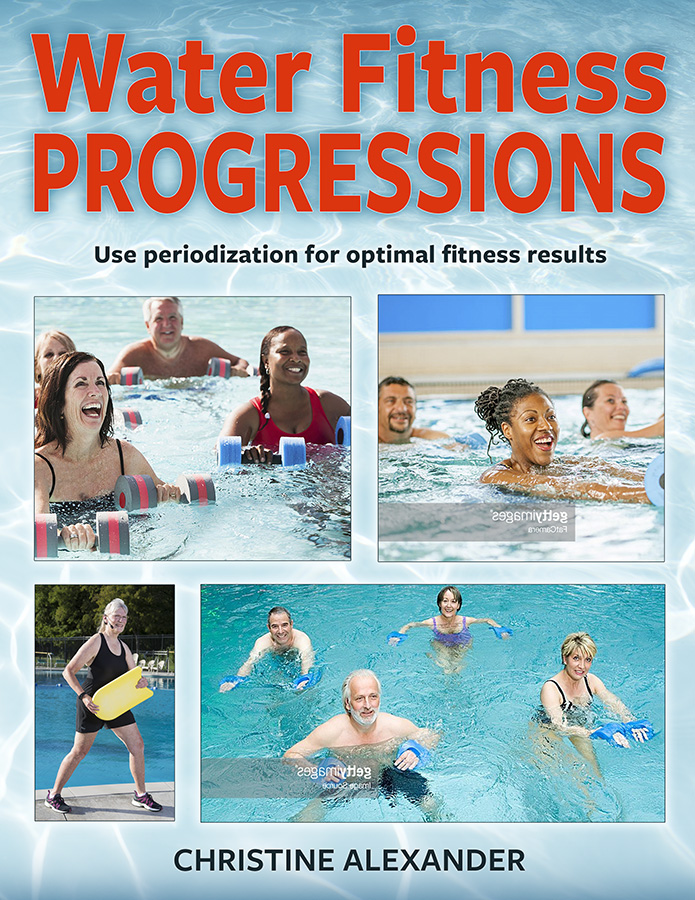
Water Fitness Progressions
Heart Rate Training, Second Edition
Understanding Sport Organizations
Aquatic Center Marketing
Complete Conditioning for Soccer
The Warm-Up
Methods of Group Exercise Instruction, Forth Edition
Every year the American College of Sports Medicine (ACSM) does an international survey to determine the health and fitness trends for the coming year. Respondents to the survey come from a variety of health and fitness professions, including personal trainers, medical professionals, exercise physiologists, professors, health and wellness coaches and a few group exercise instructors. Here are the top twenty fitness trends:
Wearable technology (fitness trackers, smart watches, heart rate monitors, etc.) This has been in the top 3 since 2016.
Home exercise gyms. These became popular because of the COVID-19 pandemic.
Outdoor activities. Also popular because of COVID-19.
Strength training with free weights.
Exercise for weight loss. This increased in popularity because of perceived (or real) weight gain during quarantine.
Personal training.
High intensity interval training.
Body weight training. This includes things like push-ups, burpees, and planks.
On-line live and on-demand exercise classes. This was the number one trend last year, but dropped to number 9 as gyms re-opened.
Health and wellness coaching.
Fitness programs for older adults.
Exercise is medicine. Doctors referring patients to fitness professionals appeared as a trend 2017.
Employing certified fitness professionals.
Functional fitness. This involves strength training to improve the activities of daily living.
Yoga. This includes a wide variety of Yoga styles.
Mobile exercise apps.
Online personal training. This refers to one-on-one sessions, as opposed to online group exercise classes.
Licensure for fitness professionals. This is a trend to pursue regulation of fitness professionals.
Lifestyle medicine. This is the practice of helping individuals and families adopt healthy behaviors for life.
Group exercise training. This dropped dramatically in popularity because of COVID-19.
Aquatic exercise is not included among the trends! That is probably because the American College of Sports Medicine is not involved in aquatics. But as anyone who has recently checked out a pool schedule knows, aquatic exercise classes are on the menu. Water fitness participants were among the first to return to their workouts after lockdowns were lifted, possibly because chlorinated water is known to kill the Coronavirus, as confirmed by a 2021 study in the U.K.
So, what are the fitness trends in aquatics? I decided to do an informal survey by checking out the classes at the International Aquatic Fitness Conference (IAFC) being held May 1-6 at Daytona Beach, Florida and Florida Mania Fitness Pro Convention being held May 20-22 at Orlando, Florida. IAFC has presenters and participants from around the world. Florida Mania is one of seven conventions for personal trainers and group exercise instructors in various cities in the United States. If I understood the class descriptions correctly, the most frequent sessions on the schedule for these two events were:
Strength training – 11 sessions at IAFC and 2 at Mania
Interval training – 8 sessions at IAFC and one at Mania
Cardio – 5 sessions at IAFC and 4 at Mania
Functional fitness – 7 sessions at IAFC and 2 at Mania
Mind-body exercise (Yoga and Pilates) – 8 sessions at IAFC
There were also 2-3 sessions each on Zumba, Barre, Combat, Circuits and a combination of swimming and water exercise. Other topics covered include water walking, choreography, multi-depth classes, ballet, Ai Chi, pelvic floor, core, post natal, cognition and stretching. There are always sessions on various kinds of aquatic equipment to give participants an opportunity to try them out. Some of these are adapted from land fitness classes:
Hydrorider (aquatic bicycle) is the most popular with 7 sessions at IAFC.
Aqua Pole – 3 sessions at IAFC and 2 at Mania
Noodles remain popular with 4 sessions at IAFC
Trampoline – 3 sessions at IAFC
Aqua Drum Vibes – 3 sessions at IAFC
Aqua Board – one session at IAFC (participants exercise on a board that floats on top of the water)
Bands – one session at IAFC
Aqua Ohm – one session at IAFC
Liquid Star – one session at Mania
This gives you an idea of the wide variety of options for an aquatic fitness class. Maybe some day aquatic fitness will be included in ACSM’s list of top twenty fitness trends.
According to the Centers for Disease Control, one in four older adults reported falling in 2018. This equals about 30 million falls. Of that number, 8 million falls required medical attention or limited activity for at least a day. By 2030 there will be 72 million older adults and 52 million falls. Obviously one of the reasons for falling is a balance issue. But another contributing factor is decreased reaction time.
Robert H Schmerling, M.D., the Senior Faculty Editor for Harvard Health Publishing wrote an article in the Harvard Health blog entitled “My Last Fall: Reaction Time and Getting Older.” After he fell and suffered an injury while running, he got to wondering why falls tend to cause more serious injuries as we age. He points out that children are able to catch themselves by stretching out a hand or by making a quick turn of the body or by grabbing a railing before they land too hard. But reaction times tend to slow as we age. This is because of slowed signals from the brain to the nerves and muscles, reduced flexibility of joints and tendons, and weaker muscles. Older adults also tend to have less accurate awareness of their extremities’ position in space.
Lois A. Bowers posted an article on the McKnights Senior Living website on research published in the American Journal of Physical Medicine & Rehabilitation that confirms the importance of reaction time. The research was conducted by James Richardson, M.D at the University of Michigan Comprehensive Musculoskeletal Center. He found that senior adults who had good reaction times were able to balance on one leg for a longer period of time than those whose brains worked more slowly.
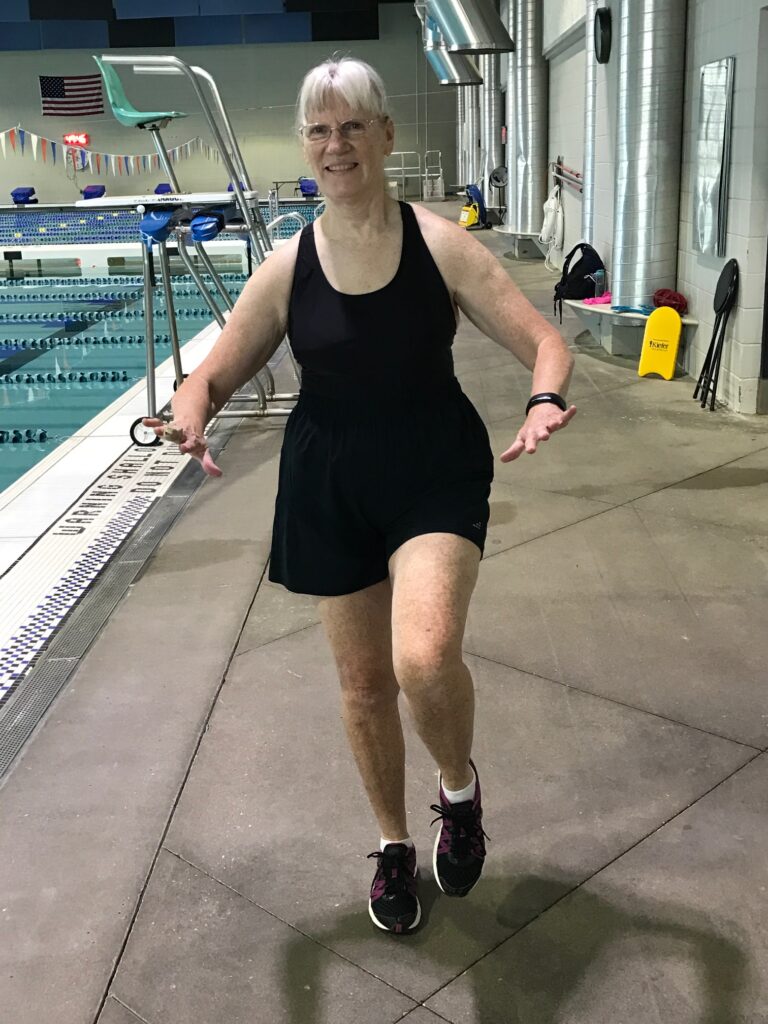
Fortunately, exercise can help improve reaction time. The Exercise and Sports Science Australia published a Position Statement on Exercise and Falls Prevention in Older People in 2011. They recommend exercises that progressively challenge the base of support, such as going from a two-legged stand, to a tandem stand, to a one-legged stand. From there move to exercises that use dynamic movements to challenge the center of gravity, such as tandem walk, circle turns, leaning and reaching activities, and stepping over obstacles. You can reduce sensory input by standing with eyes closed or standing/walking on unstable surfaces such as foam mats. Further challenges can be provided by the use of dual tasks, such as combining a memory task with a gait training exercise or a hand-eye coordination activity with a balance task. Many of these exercises can be performed in a water fitness class as well as on land (except for walking on foam mats). Participants often feel more comfortable doing the exercises in the pool because the hydrostatic pressure of the water reduces the risk of falling.
Another technique for improving reaction time is the Unpredictable Command. Ruth Sova, MS, the president of the Aquatic Therapy and Rehab Institute, wrote an article entitled “Seated and Standing, Static and Dynamic Balance” in the October/November 2019 issue of Akwa magazine. A membership in the Aquatic Exercise Association/Aquatic Therapy and Rehab Institute includes a subscription to Akwa magazine. Members can access previous issues of Akwa in the members only section of the website. Ruth Sova’s sample lesson plan in her article gives an idea of what an unpredictable command routine is like. The lesson plan is reprinted here with permission.
March in place.
Turn your head to the right.
March left.
Walk on tiptoes backwards still looking right.
March in place on tiptoes. Circle your right arm.
Walk forward normal stride while looking forward with eyes up. Reverse the circle on your right arm.
Center your eyes and walk on the outsides of your feet back to the right diagonal. Stop circling your arm. March in place. Look at your left hip.
Turn 90 degrees to the right and walk backwards. Side step to the right 4 steps. Press your hands up and down. Look forward.
Sidestep left, turn your palms up and continue pressing up and down. Look at your right elbow.
Turn 90 degrees to the right and march in place with your toes pointed in. Walk forward with your toes pointed out. Look forward.
Walk backwards with your right foot pointed out and your left foot pointed in.
Stop moving. Circle your left arm and swing your right arm forward and back. Walk forward.
With your arms still moving, turn 90 degrees to the right and side step right on the insides of your feet (toes pointed forward). Look up to the left.. Reverse your circling arm.
Do alternating knee lifts in place. Turn your right knee out. Look forward. Stop arm movement. Turn your left knee out and turn 90 degrees to the right.
By the age of 30-40 we all have postural issues and muscle imbalance that can lead to balance concerns. Adding in a section of unpredictable commands to your water fitness class will be beneficial for everyone. You can choose a section from Ms. Sova’s sample lesson plan, or make up your own. My book Water Fitness Progressions has a lesson plan on Balance that includes some unpredictable commands. Improving reaction time may prevent your participants from becoming a fall statistic in the future.
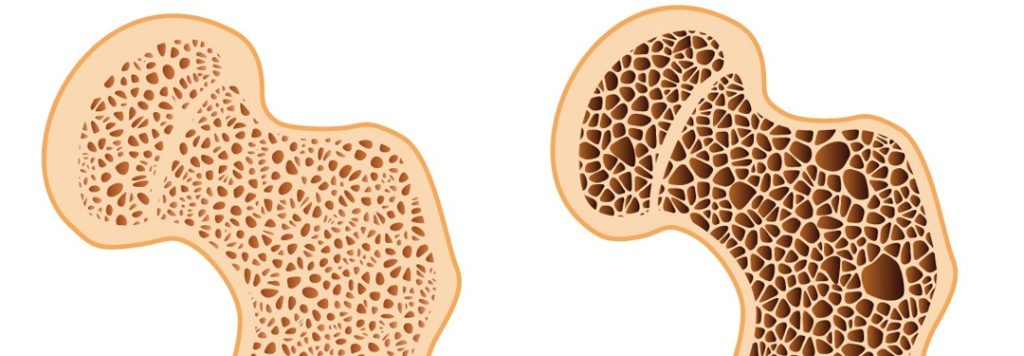
Osteoporosis is a disease characterized by loss of bone mass. The image on the left illustrates normal bone and the image on the right illustrates osteoporosis. A loss of bone mass increases the risk of fractures. Osteoporosis affects more than 10 million adults in the United States. The lifetime risk for a fracture due to osteoporosis is 40-50% for women and 13-22% for men. It used to be thought that osteoporosis is a normal part of aging, but it is now understood to be preventable and treatable. The strategies to reduce fracture risk include adequate combined intake of calcium and vitamin D, medications, weight bearing and/or resistance exercise, avoiding tobacco use, moderate alcohol use, and reducing the risk of falls.
The kind of weight bearing exercise recommended by the Bone Health and Osteoporosis Foundation (BHOF) includes high impact exercise such as tennis, running and jumping rope, and low impact exercise such as using an elliptical machine and fast walking. The kind of resistance exercise recommended includes using free weights, elastic bands or body weight. Water exercise is not listed among the recommended exercise. The buoyancy of water seems to be responsible for the idea that exercise in water has no impact and therefore is not beneficial for the prevention or management of osteoporosis. Research on water exercise and osteoporosis has been ongoing since the 1990’s and the evidence increasingly shows that water exercise can indeed be included in the toolbox. Nineteen studies were referenced in an article written by Flavia Yazigi PhD and Mushi Harushi MS entitled “Aquatic Exercise Against Osteoporosis.” It appeared originally in Akwa magazine published by the Aquatic Exercise Association (AEA) in April/May 2016; it was updated in 2019. AEA published four articles on the latest research in various issues of Akwa magazine in 2021. To read the articles you have to be a member of AEA. To join, click on the link to their website and then you can access past issues of Akwa. Below is a sampling of the findings written up in these articles.
Kimberly Huff, MS in her article “HIT It Before You Break It” in the April/May 2021 issue of Akwa, notes that the strength of bone tissue is dependent on the amount of stress placed on the bones. Muscles are attached to bones, so the more forceful the muscle contraction, the more stress on the bones. A combination of high impact training and high intensity resistance training has the greatest effect on bone density, as noted by the BHOF. A combination of high impact aquatic jump training, such as vertical and lateral jumps, tuck jumps and ankle hops, or high intensity interval training (HIIT) in which participants worked at near maximal effort, plus high intensity resistance training performed in water showed improvements in bone density and muscular strength and power nearly as effective as land-based training. Maximal effort was determined using either perceived exertion or by requiring participants to keep pace with a set cadence. Information on aquatic exercises to use for interval training and how to progress them to high intensity is available in my book Water Fitness Progressions. Resistance training should focus on the hip, spine and forearm as those are the areas of the body most susceptible to fractures. Squats, lunges, leg extensions, leg curls, hip extensions, chest presses, shoulder presses, biceps curls and triceps extensions address these areas.
Flavia Yazigi PhD lead a study (Yazigi at al., 2019) that looked at deep water exercise and found that it offers benefits to individuals with osteoporosis when the workout is based on aerobic and resistance exercises. The entire body, except for the head, is subjected to constant hydrostatic pressure in deep water. Water resistance acts in the opposite direction of body motion, therefore greater muscle activity is required. Muscular strengthening is enhanced, particularly when near maximal effort is exerted.
Eduardo Netto, MS, in his article “Osteoporosis – Can Exercise Help?” in the June/July 2021 Issue of Akwa, points out that there is no one specific exercise protocol suitable for everyone. Young or healthy people may engage in activities with high loads such as tennis, running and jumping rope, but older people may need to increase their level of exercise with activities with less impact, such as walking, complemented with resistance exercise using free weights. Since aquatic exercise has presented numerous benefits for the maintenance and prevention of osteoporosis, individuals have the option of choosing the exercise mode that most appeals to them. Interestingly, several studies have observed higher participation in aquatic exercise compared to land-based exercise. The best exercise is, of course, the one you do frequently.
Alex Mong, a student at West Virginia University studying exercise physiology, in his article “Balance Is Key: Aquatic Exercise to Improve Bone Mineral Density” in the June/July 2021 issue of Akwa, points out that falls which can lead to fractures are an issue for people with osteoporosis. According to the National Council on Aging, 1 in 4 Americans over the age of 65 falls each year. Improving balance is the most important thing that can be done to reduce the risk of falling. However, once someone has fallen and broken a bone, they often become inactive out of fear of falling again. Exercise in water reduces the risk of injury from falling while exercising. It also helps with balance because the buoyancy and viscosity of water makes participants who are afraid of falling feel more secure. There are many exercises that can be done in water to improve balance, such as gait training, hip and trunk stabilization, muscular strengthening, exercises focusing on the ankles, and unpredictable commands to improve reaction time.
Brianna Martinez, BS, Eric Leslie, MS, and Len Kravitz, PhD wrote “Exercise for Bone Health: What Can Aquatic Exercise Do?” in the December 2021/January 2022 issue of Akwa. They summarized nine research studies done in the past decade on osteoporosis and water exercise. The authors conclude that research shows water exercise improves bone mineral density, which makes aquatic exercise an exciting alternative to traditional resistance training and land-based exercise for bone health.
The Bone Health and Osteoporosis Foundation may not have any information on water exercise on their website, but they have a lot of additional information about osteoporosis for both healthcare providers and patients. Click on the link to check it out. There are also support groups for people with osteoporosis. Bone Buddies is a free support group that meets on the second Saturday of each month on Zoom at 10:00 AM Central Standard Time. To attend a meeting, go to https://us02web.zoom.us/j/83301196518 The meeting ID is 833 0119 6518. The Passcode is Unity. For more information, you can contact the facilitator, Elaine Henderson, at esenderson214@gmail.com
Thanks to Jason Lewis and https://strongwell.org/ for this guest article on helpful apps for seniors.
Studies have shown that approximately 67 percent of seniors are sedentary for most of the day — a lifestyle that can lead to arthritis, heart disease, depression, and hypertension. Staying health-conscious into your senior years is vitally important, but it can be difficult to know what you should do. Fortunately, technology can offer a myriad of tools to help you take control of your health and wellbeing. Here are just a few must-have apps to help you stay in great shape.
Instant Heart Rate
Your heart rate can tell you so much about your health, but it can be complicated to take your own pulse and figure out what it means. Luckily, Instant Heart Rate makes it easy. This app uses your phone’s camera to measure your heart rate and provides you with information as to what healthy heart rates look like for someone in your age group. Instant Heart Rate also allows you to perform a stress test by measuring your heart rate as you stand; if you keep regular track of your heart rate, you can bring the results to your doctor to provide him with more long-term information about your health.
Map My Walk
This excellent fitness tracker uses GPS to track the distances you walk. It provides you with suggestions for routes you might enjoy, and gives details about calories burned, how fast you went, and the elevation of your walks. You can use the app to set exercise goals for yourself and keep track of your progress. And if you prefer other sports, don’t worry — while it’s called Map My Walk, this app actually allows you to track your progress in over 600 different activities, making it an incredibly versatile option. If you prefer to exercise in the pool to stay fit, there are also apps available to measure your output and track your progression, such as Polar Flow which connects to the waterproof Polar M430 fitness tracker.
Glucose – Blood Sugar Tracker
Perfect for anyone who needs to keep track of their blood sugar for health reasons, Glucose is a simple-to-use app. It lets you track your weight, ketones, A1C, insulin, and blood pressure, and creates clear graphs to help you visualize your long term health trends. The app also keeps track of what time it is when you check your blood sugar, giving you one less thing to remember. And to make things even simpler, you can export your reports to show your doctor if need be.
What’s Covered by Medicare
Insurance can be incredibly confusing. Luckily, in 2019 Medicare launched an app called “What’s Covered,” designed to quickly tell you whether a procedure is covered under your insurance. The What’s Covered app is a great way to simplify your plan so that you know exactly what you’ll be getting and won’t have to deal with any nasty surprises.
Online Resources
Be sure to take advantage of some online resources as well. For example, if you need to downsize to maintain a healthy lifestyle, you can visit home-listing sites like Zillow and Trulia to help refine your search for a new home. If you require some extra support and need help finding an assisted living or nursing facility, sites like SeniorCare.com can help you explore your options. For example, they have detailed facility information, reviews, and cost data on 39 Dallas-area nursing homes.
The Importance of Technology
While the plethora of apps and fitness trackers can be overwhelming, many of them offer the perfect way to easily keep track of your health and ensure your ongoing wellbeing. But if you find that your phone is outdated and unable to run the apps you want, it may be time for an upgrade. Newer-model phones offer extended battery life, incredible graphics, and intelligent Wi-Fi that lets you connect more quickly no matter where you are.
Whatever phone you use, remember that it’s a tool for you to utilize; finding all the best apps will let you fully take advantage of technology’s capabilities while staying happy and healthy.