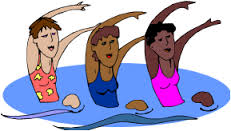
Do you like being active? Do you enjoy the water? Do you like helping people? Are you interested in being a water fitness instructor?
There is a shortage of water fitness instructors in the Dallas-Fort Worth area. Check out the Job Postings on the website of the Metroplex Association of Aquatic Professionals at www.maapdfw.com to see how many facilities are looking for instructors. So how do you go about becoming a water fitness instructor? I’m glad you asked! You can sign up for my class coming up in October.
Beginning Water Fitness Instructor Class
Saturday October 3 and Saturday October 10 – Participants attend both days
Time: 10:00 am to 2:30 pm
Cost: $60 for residents of McKinney, $65 for non-residents
Location: McKinney Senior Pool, 1400 S. College Street, McKinney, TX 75069
To register, go to https://webtrac.mckinneytexas.org or stop by the pool and register in person or call 972-547-7495 for assistance.
The class gives basic information necessary to teach a water fitness class.


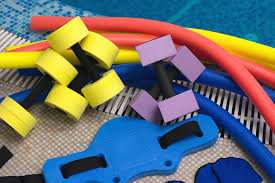
Some of the things you will learn are:
- The names of the muscles and how they work during exercise
- How to increase and decrease intensity so that you achieve your target heart rate
- The properties of water and how to manipulate them during a water fitness class
- How to use various kinds of equipment
The class is ideal for people who want some idea of what they have to learn before they sign up to take a certification test, for people who have lots of questions, and for people who do better with hands on experience than with just reading a book. The next step is to sign up to get a certification. A good entry level certification is offered by the United States Water Fitness Association (USWFA). You do not have to take my Beginning Water Fitness Instructor course in order to get their certification. If you have some fitness experience and don’t feel like you need any additional training, you can contact the USWFA directly at www.uswfa.org. The cost for a certification is $247. They will send you a water fitness instructor manual, an open book test, and some forms to fill out, which you will bring to a National Testing Day (NTD). At the NTD you take a closed book test and teach an 8-minute sample class. The instructor-trainer tells you at the end of the day whether you passed. After that, you can contact some of those facilities looking for instructors and get your own class.
See you in the pool!
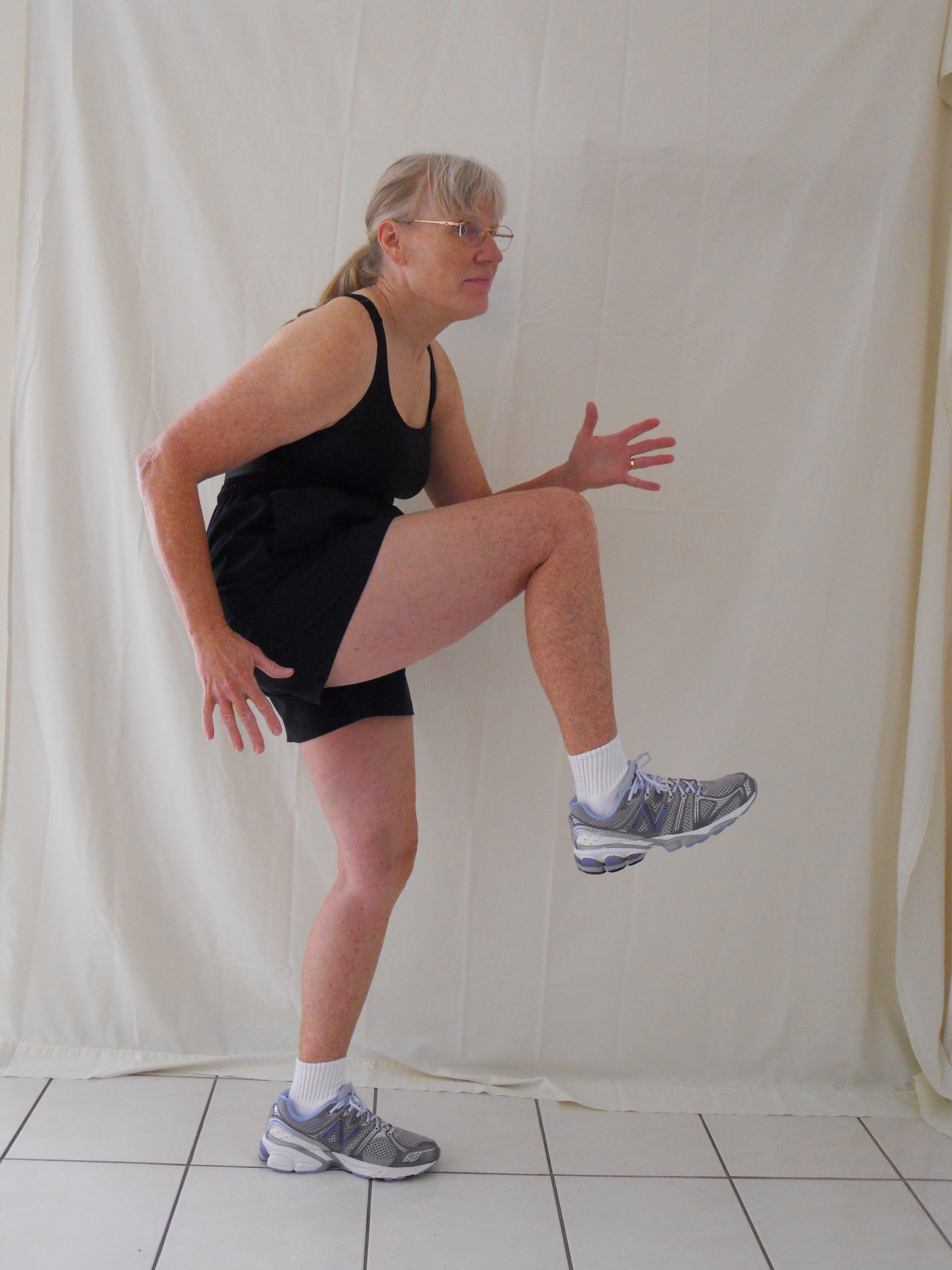
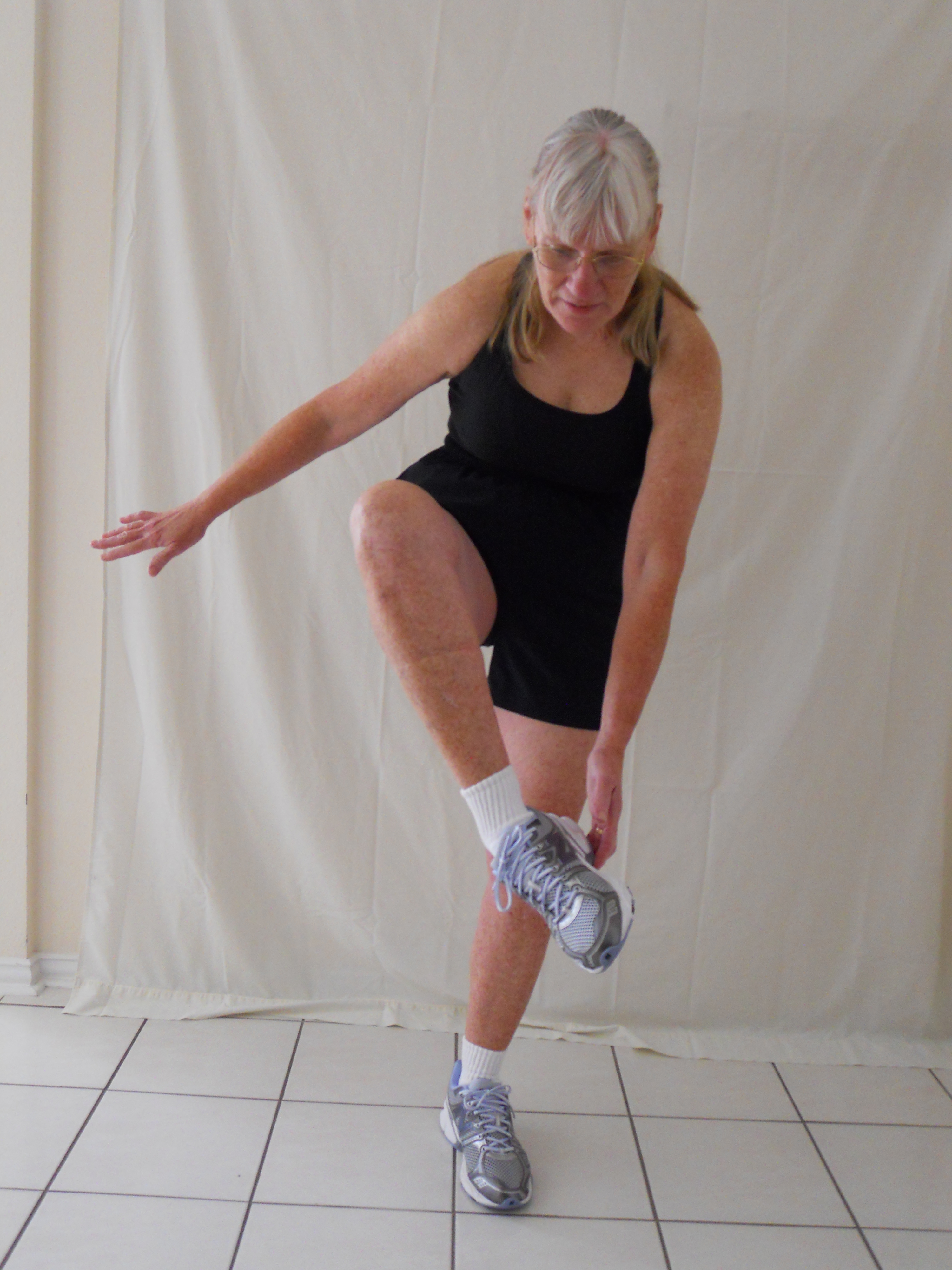


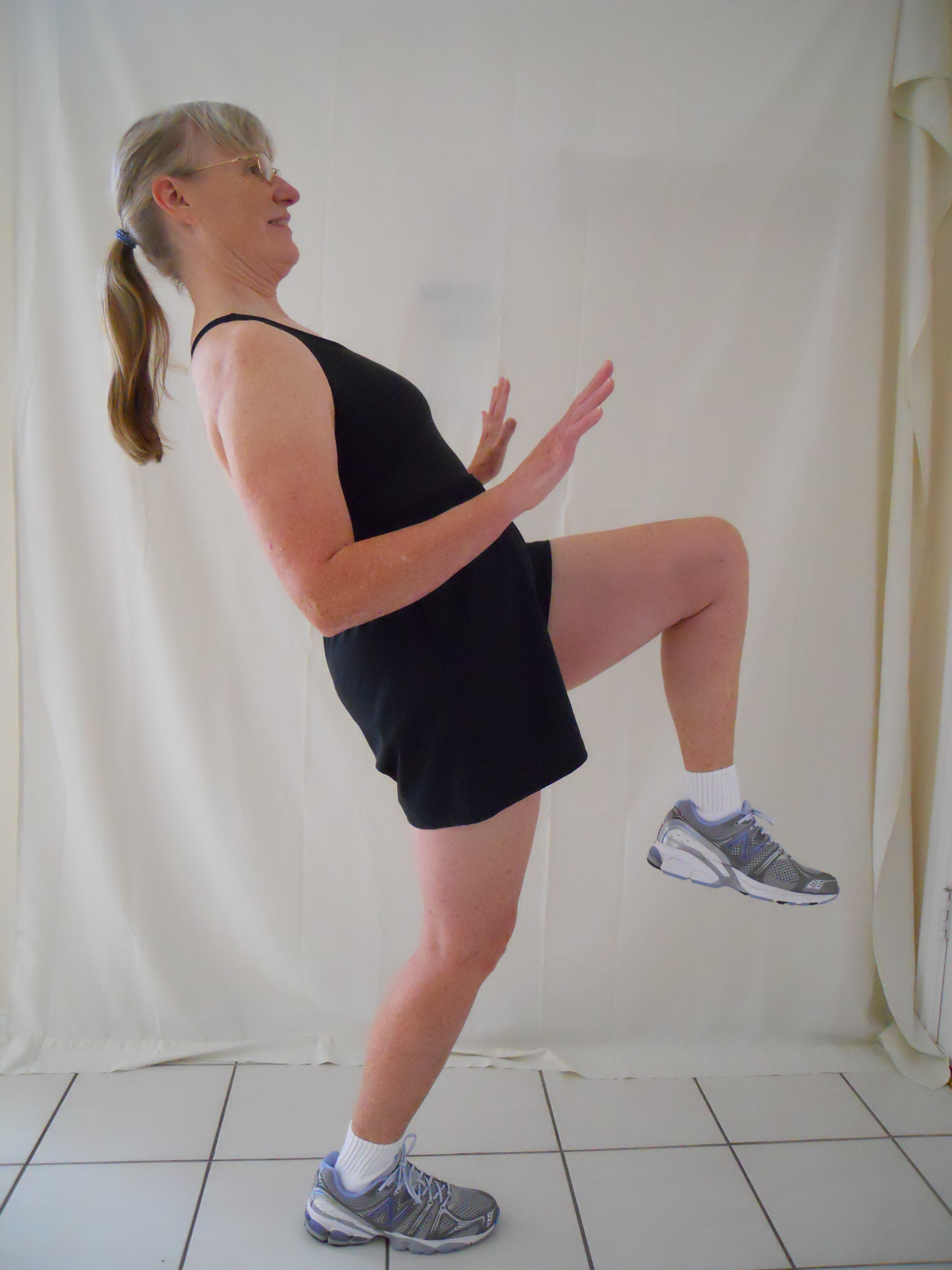

 of time behind the steering wheel of your car, chances are that you are in a position known as passive forward flexion. In this posture, you are stretching out the muscles of your upper back, your erector spinae and your gluteus maximus. Once the muscles get stretched out, just like an elastic band that gets stretched out, it is hard to “tighten them up” again. Combine weak muscles on the back side of the body with the effects of gravity as we age, and the end result is that you become bent over, unable to stand up straight, and prone to poor balance and falls.
 ion equal to running on pavement. Instead concentrate on increasing your frontal resistance and dragging the water along with you. You will move slower, but you will work harder and your posture will improve.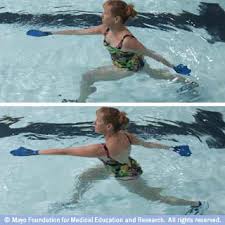
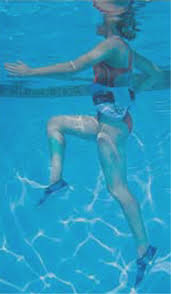
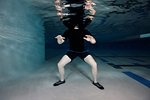
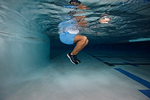
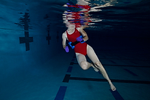
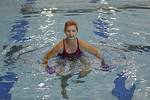 ough not so much for people who float easily. The same methods can increase intensity in deep water with the exception of jumping and suspended moves. In addition, deep water exercisers can elevate the shoulders out of the water with powerful leg moves or with sculling (see Photo 4). High intensities can be achieved in both shallow water and deep water.
 If you live in the Dallas-Fort Worth area, you have a great networking opportunity right in your backyard! The Metroplex Association of Aquatic Professionals (MAAP) is an organization of water fitness instructors that meet 4-5 times a year for networking and education. Membership dues are a bargain at only $25 a year. Members get discounts on Continuing Education Trainings (CETs) presented by some of the top names in the business. Julie See, the President in charge of Education for the Aquatic Exercise Association (AEA) and the editor of AKWA magazine will present 2 exciting workshops on September 26 in Plano. Master Workouts are sample classes taught by MAAP members and they are free for members. MAAP President Gary Brindle will present the next Master Workout on Tabata, a hot new trend in fitness, on November 7 in Allen. MAAP has a website where you can find a calendar of events, a list of job openings in the area, and links to other websites where you can find certifications, swimsuits, water shoes, music, equipment and more. MAAP members get e-mail notices whenever the website has been updated. There is a link to the MAAP website on my website at www.waterfitnesslessons.com. Find it at the bottom of the page, click on it, and start networking!